

Breathable Nursing Scrubs for Hot Hospitals: A Complete Guide
Table of Contents
- Why Breathable Nursing Scrubs Matter in Hot Hospital Environments
- Understanding Moisture-Wicking Nursing Scrubs and How They Work
- Fabric Blends That Keep You Cool: Polyester, Cotton, and Spandex Compared
- Key Features of Breathable Scrub Materials: Four-Way Stretch, Airflow, and Weight
- Scrub Fabric Guide for Nurses: Choosing the Right Material for Your Shift
- How to Prevent Sweating in Scrubs During Long Clinical Shifts
-
Top Breathable Nursing Scrubs for Hot Hospitals: Comparison and Recommendations
- 1. Love2wear Scrubs: Quality Without the Premium Price
- 2. FIGS Scrubs with FIONx Fabric: Premium Moisture-Wicking Performance
- 3. Cherokee Infinity: 360° Stretch and Antimicrobial Protection
- 4. Grey's Anatomy by Barco: Soft Stretch for Extended Comfort
- 5. Mandala Scrubs with Equa Tek: Affordable Breathability
- 6. Barco One: Eco-Friendly Temperature Regulation
- Durability and Maintenance: Keeping Your Breathable Scrubs in Top Condition
Breathable Nursing Scrubs for Hot Hospitals: A Complete Guide
Last Updated: August 4, 2026
Healthcare professionals working long shifts in warm hospital environments need scrubs that breathe, wick moisture, and hold up through countless washings. At love2wear_scrubs, we understand that truly breathable scrubs require more than marketing promises. This guide breaks down the fabric science, compares real options, and shows you exactly what to look for when choosing scrubs that keep you cool under pressure.
The difference between ordinary scrubs and truly breathable ones comes down to three factors: fabric composition, construction weight, and moisture-management technology. The right scrubs pull sweat away from your skin, allow it to evaporate quickly, and maintain their shape and color even after 50+ washings.
Why Breathable Nursing Scrubs Matter in Hot Hospital Environments
Extended heat exposure during clinical shifts affects your ability to concentrate, increases fatigue, and can lead to dehydration if your scrubs trap moisture against your skin. Traditional cotton scrubs become heavy and clingy within the first few hours, creating an environment where bacteria and odor thrive.
Modern moisture-wicking fabrics address this by using engineered synthetic fibers that pull sweat away from your body and allow it to evaporate rapidly from the fabric surface. Breathable scrubs also support hygiene standards, moisture trapped against your skin creates an ideal environment for bacterial growth and odor development. Performance fabrics with antimicrobial properties combat this naturally, keeping you fresher throughout your shift.
Understanding Moisture-Wicking Nursing Scrubs and How They Work
Moisture-wicking technology pulls sweat away from your skin and moves it to the outer surface of the fabric where it can evaporate quickly. This process, called capillary action, uses the fabric's fiber structure to create tiny channels that transport moisture outward rather than letting it sit against your body.
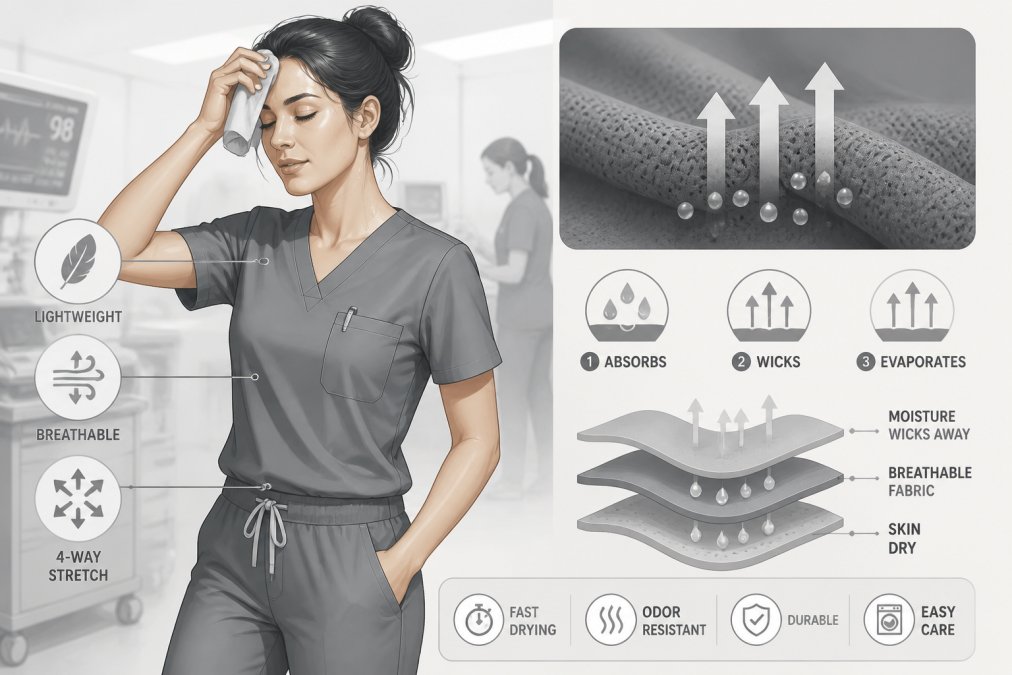
Synthetic fibers like polyester are naturally hydrophobic, meaning they repel water. When engineered with the right weave pattern and fiber diameter, they create a fabric that moves sweat outward while remaining soft and comfortable against your skin. Quality moisture-wicking scrubs combine this technology with breathability, the fabric's ability to allow air to pass through, creating a lightweight, cool fabric that performs under the demands of a 12-hour shift.
Fabric Blends That Keep You Cool: Polyester, Cotton, and Spandex Compared
The fabric blend determines how your scrubs perform in hot environments.
Polyester is the foundation of most performance scrubs. It's hydrophobic, durable, and resists shrinking and fading. However, pure polyester can feel plasticky, which is why it's blended with other fibers.
Cotton adds softness and breathability. It's naturally comfortable against skin and allows excellent airflow. However, cotton absorbs moisture rather than wicking it; when you sweat, cotton holds that moisture close to your body, making it feel heavy and clammy.
Spandex (also called elastane or Lycra) provides stretch and recovery. It allows fabric to move with your body during physical activity and returns to its original shape after washing. Spandex typically makes up 2-5% of scrub blends.
The ideal blend for breathable nursing scrubs in hot hospitals typically falls into this range:
- Polyester: 65-80% (moisture-wicking foundation)
- Cotton: 15-30% (comfort and airflow)
- Spandex: 2-5% (stretch and recovery)
| Fiber | Moisture-Wicking | Breathability | Durability | Comfort |
|---|---|---|---|---|
| Polyester | Excellent | Good | Excellent | Fair |
| Cotton | Poor | Excellent | Fair | Excellent |
| Spandex | N/A | Good | Good | Good |
| Poly-Cotton Blend | Good | Excellent | Excellent | Excellent |
Key Features of Breathable Scrub Materials: Four-Way Stretch, Airflow, and Weight
Beyond fabric composition, specific construction features determine whether scrubs will keep you cool during clinical shifts.
Four-way stretch means the fabric stretches horizontally, vertically, and diagonally. This reduces constriction and allows you to maintain proper posture throughout your shift.
Airflow technology refers to the weave pattern and fiber construction that allows air to circulate through the fabric. High-performance scrub fabrics use engineered weaves that maximize airflow while maintaining strength.
Fabric weight is measured in grams per square meter (gsm). For hot hospital environments, target scrubs in the 150-180 gsm range. This weight provides durability for frequent washing while remaining light enough for comfort during active shifts.
Additional features that enhance breathability include tagless construction, flat seams, ventilation panels, anti-microbial treatments, and wrinkle-resistant finishes.
Scrub Fabric Guide for Nurses: Choosing the Right Material for Your Shift
Selecting the right scrub fabric depends on your specific work environment, shift length, and personal preferences.
For emergency departments and high-activity environments: Choose scrubs with high polyester content (70%+) and four-way stretch for maximum moisture-wicking and unrestricted movement.
For operating rooms and controlled environments: Scrubs with balanced poly-cotton blends (60/40 or 65/35) work well since temperature is more controlled.
For home health and clinic settings: Cotton-rich blends (40% polyester, 55% cotton, 5% spandex) offer comfort and breathability.
For 12+ hour shifts in hot environments: Prioritize moisture-wicking over pure comfort. Polyester-dominant blends (75%+ polyester) with antimicrobial treatments outperform comfort-first options during extended shifts.
Lighter colors (white, light blue, light gray, sage) reflect heat better than darker colors, contributing meaningfully to temperature management throughout your shift.
How to Prevent Sweating in Scrubs During Long Clinical Shifts
While no scrubs eliminate sweating entirely during intense work, strategic choices minimize moisture buildup and its effects on comfort and performance.
Start with the right fabric foundation. Moisture-wicking scrubs are non-negotiable for long shifts in hot environments. The difference becomes apparent within the first two hours of a shift.
Layer strategically. Wear a lightweight, moisture-wicking undershirt beneath your scrubs. Merino wool or synthetic performance undershirts work better than cotton.
Maintain proper hydration. Staying well-hydrated helps regulate body temperature and reduces excessive sweating.
Choose the right fit. Scrubs that are too tight restrict airflow and trap heat. The right fit is snug enough that fabric stays in contact with your body but loose enough that air can circulate.
Manage fabric care properly. Wash in cold water, use minimal detergent, and avoid fabric softeners. Line dry or low-heat dry to preserve the fabric's engineered properties.
Take short breaks in cooler areas. Even five minutes in a cooler environment allows your body temperature to drop and reduces overall heat stress during your shift.
Top Breathable Nursing Scrubs for Hot Hospitals: Comparison and Recommendations
Finding scrubs that actually perform requires looking beyond marketing claims to specific fabric technology and real-world performance.
1. Love2wear Scrubs: Quality Without the Premium Price
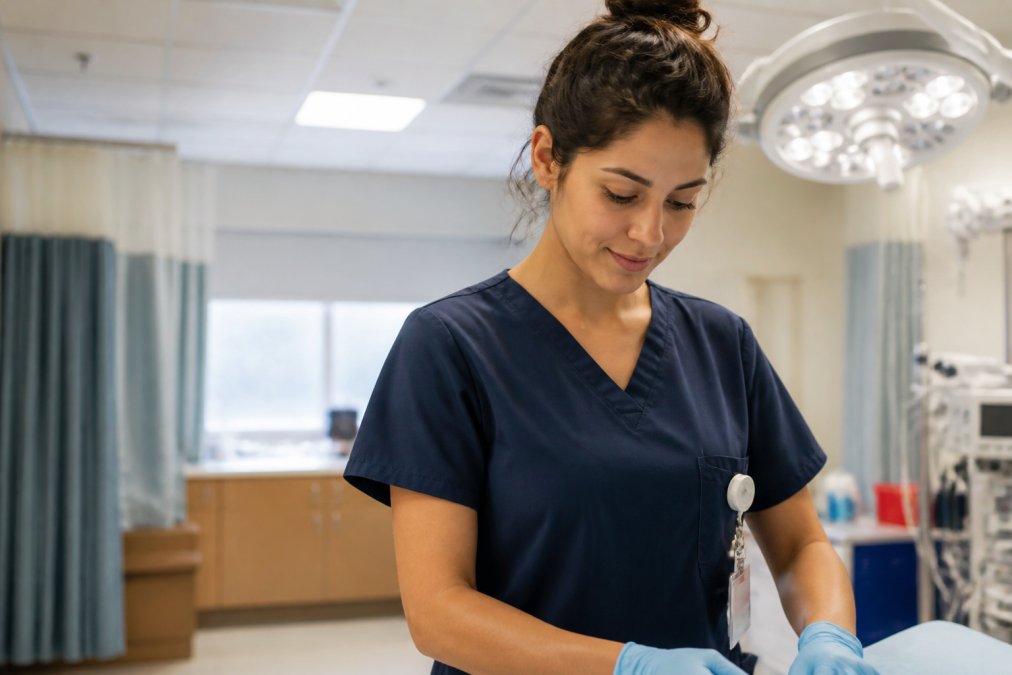
Love2wear scrubs deliver breathable fabric engineered for long shifts, modern fit that moves with you, and durability that survives frequent washing without fading or shrinking.
Key features: Breathable fabric designed for healthcare environments, modern fit that flatters without sacrificing movement, durable construction that maintains appearance through frequent washings.
Best for: Nurses and healthcare professionals seeking reliable, breathable scrubs without paying premium prices for brand names.
Pros: Genuinely breathable fabric that performs during high-activity shifts, modern fit appeals to professionals who want contemporary style, durability means you're not replacing scrubs frequently.
Cons: Less brand recognition than established names, modern fit may require careful sizing if you prefer relaxed, loose-fitting scrubs.
2. FIGS Scrubs with FIONx Fabric: Premium Moisture-Wicking Performance
FIGS pioneered premium medical apparel and their FIONx fabric remains one of the best moisture-wicking options available.
Key features: FIONx four-way stretch fabric with advanced moisture-wicking, antimicrobial properties that reduce odor-causing bacteria, wrinkle-resistant finish, multiple functional pockets.
Best for: Healthcare professionals willing to invest in premium scrubs for exceptional moisture-wicking performance.
Pros: Exceptional moisture-wicking and antimicrobial properties, fabric maintains shape and color through extended use, durable construction justifies higher investment.
Cons: Premium pricing reflects brand positioning, athletic fit requires careful sizing.
3. Cherokee Infinity: 360° Stretch and Antimicrobial Protection
Cherokee Infinity scrubs offer 360-degree stretch fabric combined with PROTX2 antimicrobial technology.
Key features: 360° stretch fabric for unrestricted movement, PROTX2 antimicrobial technology fights odor-causing bacteria, moisture-wicking fabric, wrinkle-resistant finish.
Best for: Active healthcare workers in high-movement environments who prioritize flexibility and odor management.
Pros: 360° stretch genuinely improves movement during active shifts, combines stretch, moisture-wicking, and antimicrobial in one fabric, competitive pricing.
Cons: Midweight fabric may feel less ideal for maximum cooling in extreme heat, stretch-focused design may feel different from traditional scrubs.
4. Grey's Anatomy by Barco: Soft Stretch for Extended Comfort
Grey's Anatomy scrubs prioritize comfort during long shifts through exceptionally soft, stretchy fabrics and thoughtful design details.
Key features: Soft, stretchy fabrics, moisture-wicking materials, multiple pockets including specialized tech pockets, yoga waistbands, tagless construction.
Best for: Healthcare professionals prioritizing comfort and soft feel during extended shifts.
Pros: Ultrasoft fabric feels luxurious against skin, effective moisture-wicking performance, thoughtful design details improve comfort.
Cons: Some collections carry higher pricing, emphasis on softness sometimes comes at the expense of maximum durability.
5. Mandala Scrubs with Equa Tek: Affordable Breathability
Mandala scrubs use proprietary Equa Tek fabric engineered for spill-proof, wrinkle-free performance at transparent pricing.
Key features: Equa Tek fabric woven for spill-proof performance, moisture-wicking, wrinkle-free finish, antimicrobial properties, up to nine pockets.
Best for: Budget-conscious clinicians who need high-performance scrubs without premium pricing.
Pros: Significantly more affordable than premium brands, highly breathable and comfortable, practical pocket design supports clinical workflow.
Cons: Less brand recognition than established names, relaxed fit may not appeal to those preferring tailored silhouettes.
6. Barco One: Eco-Friendly Temperature Regulation
Barco One scrubs feature temperature-regulating technology and sustainability focus through Arcgreen technology, which uses recycled plastic bottles in the fabric construction.
Key features: Arcdry technology for moisture-wicking and wrinkle resistance, Arcgreen technology uses recycled plastic, four-way stretch, temperature-regulating properties.
Best for: Healthcare professionals seeking eco-friendly scrubs with advanced moisture-wicking and temperature regulation.
Pros: Excellent moisture-wicking and temperature regulation, sustainable manufacturing using recycled materials, durable, wrinkle-resistant fabric.
Cons: Premium pricing similar to other high-end brands, sustainability focus adds cost that not all professionals prioritize.
Durability and Maintenance: Keeping Your Breathable Scrubs in Top Condition
Investing in quality breathable scrubs only pays off if you maintain them properly. Incorrect washing and drying degrades the engineered properties that make these scrubs perform.
Washing protocol matters significantly. Use cold water rather than hot; hot water can damage synthetic fibers and reduce moisture-wicking properties. Wash with minimal detergent and avoid fabric softeners entirely; they create a waxy coating that blocks capillary action. Wash separately from heavy items to avoid abrasion that accelerates pilling.
Drying affects longevity. Line drying preserves fabric integrity best. Low-heat machine drying is acceptable but avoid high heat and dryer sheets, which coat fibers and reduce performance.
Address stains promptly. Treat blood, body fluids, or other clinical stains immediately to prevent permanent damage.
Inspect seams and pockets regularly. Small tears or loose seams should be repaired promptly to prevent expansion.
Expect realistic lifespan. Quality breathable scrubs typically last 50-80 washings before visible wear becomes apparent, translating to roughly 1-2 years of regular use.
Finding breathable nursing scrubs for hot hospitals means prioritizing moisture-wicking fabric, four-way stretch, and lightweight construction over fashion trends. Love2wear_scrubs delivers this combination through engineered breathable fabrics and modern fit designed specifically for clinical professionals working long shifts. When you choose scrubs that actually manage moisture and allow airflow, you're investing in comfort, performance, and durability that makes every shift more manageable.
Frequently Asked Questions
What makes moisture-wicking nursing scrubs better for hot hospitals than regular cotton scrubs?
Moisture-wicking scrubs pull sweat away from your skin to the fabric's outer layer, where it evaporates faster. This keeps you drier and cooler throughout your shift. Cotton absorbs sweat and holds it against your skin, making you feel heavier and hotter. In hot hospitals with high activity levels, moisture-wicking fabrics significantly improve comfort during long clinical shifts and help prevent heat-related fatigue.
How do I choose breathable nursing scrubs that will actually stay in place during a 12-hour shift?
Look for scrubs with four-way stretch fabric and an ergonomic fit that moves with your body without riding up or shifting. Check that pockets are reinforced with double-stitching to handle the weight of scissors, phones, and stethoscopes. Read reviews from other nurses about how the fit holds up during bending and reaching. Test the sizing carefully, many modern scrubs run athletic or tailored, so size up if you prefer more room for movement.
Are polyester-blend scrubs better than 100% cotton for staying cool in hot hospital environments?
Polyester blends are typically better for hot environments because they dry faster and wick moisture more effectively than pure cotton. A common blend is 65% polyester and 35% cotton, which balances breathability with durability. Pure cotton retains moisture and takes longer to dry, making it less ideal for high-heat, high-activity settings. Polyester blends also resist wrinkles and fading better, which helps scrubs maintain their professional appearance through multiple wash cycles.
How can I prevent excessive sweating in scrubs during high-intensity shifts?
Choose scrubs with lightweight construction and excellent airflow properties, look for fabrics rated as highly breathable with antimicrobial technology to reduce odor. Layer with a moisture-wicking undershirt if needed. Opt for lighter colors, which reflect heat better than dark colors. Take brief breaks to air out if possible, and wash scrubs after each shift to maintain the fabric's moisture-wicking effectiveness. Proper fit also matters, too-tight scrubs restrict airflow, while well-fitted scrubs allow air to circulate around your body.
This article was written using GrandRanker