

How to Keep Scrubs Looking New: 7 Steps
Table of Contents
- Pre-Wash Preparation and Sorting
- Choosing the Best Laundry Detergent for Scrubs
- Water Temperature and Wash Cycle Settings
- How to Remove Stains from Medical Scrubs
- Drying Techniques to Keep Scrubs Looking New
- How Often to Replace Scrubs for Optimal Performance
- Storage and Maintenance Between Shifts
- Conclusion
Last Updated: August 13, 2026
Pre-Wash Preparation and Sorting
The foundation of keeping scrubs looking new starts before they hit the washing machine. Pre-wash preparation determines whether your medical uniforms maintain their color, fit, and fabric integrity over months of wear.
Start by inspecting your scrubs immediately after your shift. Check all pockets for items left behind, pens, scissors, stethoscopes, and other tools can damage fabric during washing. Remove any items and empty pockets completely. This simple step prevents tears and snags that compromise the garment's professional appearance.
Next, address stains immediately. Fresh stains are exponentially easier to treat than set-in ones. If you have blood, body fluids, or other biological contamination on your scrubs, rinse the affected area with cold water as soon as possible. Hot water sets protein-based stains permanently, so always use cold water for initial treatment.
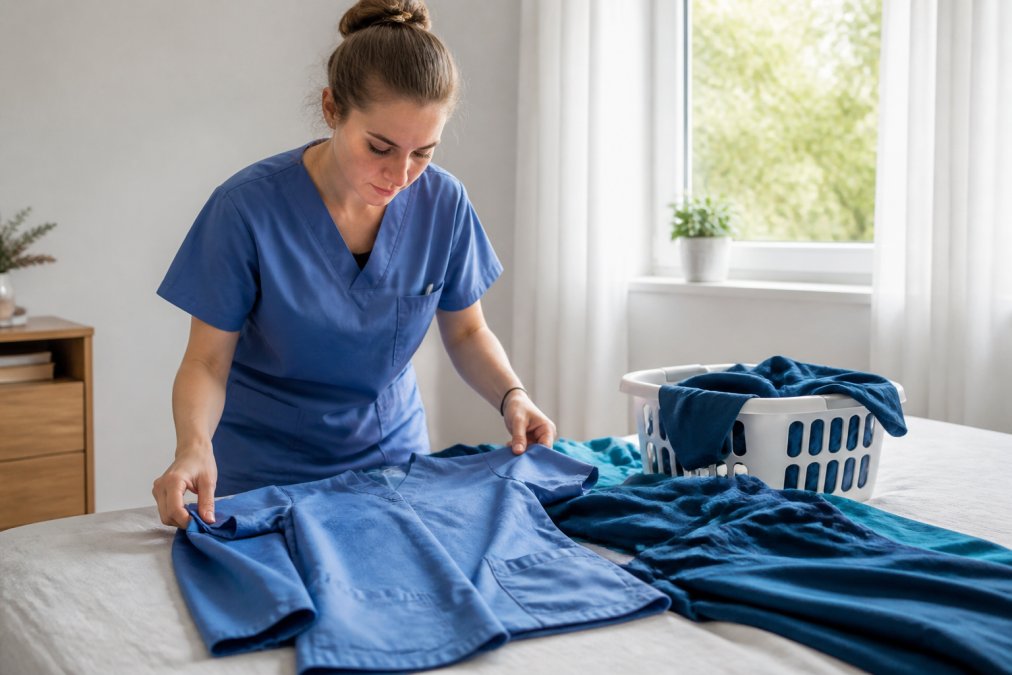
Separate your scrubs by color before washing. Darker colors should be washed separately from lighter ones to prevent dye transfer that dulls lighter scrubs. If you're washing new scrubs for the first time, wash them alone, as new garments release excess dye in the first few washes.
Check the fabric content label on each garment. Most scrubs are cotton blends or synthetic fibers like polyester, and some include moisture-wicking technology. Understanding your fabric type guides your washing decisions, some materials tolerate hot water better than others, while synthetic fibers may require lower heat settings to prevent shrinkage and pilling. Sort by fabric type as well, since similar fabrics respond consistently to water temperature and detergent.
Choosing the Best Laundry Detergent for Scrubs
The detergent you choose directly impacts how long your scrubs maintain their appearance and functionality. Look for detergents specifically formulated for medical or professional uniforms. These products balance cleaning power with fabric care, removing biological contamination and body oils without harsh chemicals that degrade synthetic fibers.
Enzyme-based detergents work exceptionally well for medical scrubs because they break down organic matter, blood, sweat, and other biological contamination, at the molecular level. However, enzymes work best in warm water, so pair an enzyme detergent with appropriate temperature settings for optimal results.
Avoid fabric softeners entirely. Fabric softeners coat synthetic fibers with a waxy residue that reduces moisture-wicking, traps odors, and accelerates pilling. If you prefer softer-feeling scrubs, use distilled white vinegar as a natural alternative during the rinse cycle. Add half a cup to the rinse cycle. The vinegar smell disappears completely once the scrubs dry, and you'll notice improved fabric feel and breathability.
For healthcare professionals concerned about anti-microbial properties, some detergents include silver-ion technology or other antimicrobial additives. Choosing a detergent that matches your specific concerns, whether that's stain removal, odor control, or maintaining moisture-wicking functionality, is recommended.
Use the correct amount of detergent. More detergent does not mean cleaner scrubs. Excess detergent leaves residue that dulls colors, stiffens fabric, and traps odors. Follow the manufacturer's recommendations based on load size and water hardness.
Water Temperature and Wash Cycle Settings
Water temperature is one of the most misunderstood aspects of scrub care. Cold water wash is the best default for keeping scrubs looking new. Cold water prevents color bleeding, reduces shrinkage risk, and minimizes fading. It's especially critical for darker colors and new garments.
Warm water is acceptable for moderately soiled scrubs with everyday sweat and body oils but no significant stains. Warm water improves detergent effectiveness compared to cold water while still protecting fabric integrity.
Hot water should be reserved only for heavily soiled scrubs with significant biological contamination or for white uniforms that can tolerate higher temperatures. Hot water accelerates color fading, increases shrinkage risk, and can damage synthetic fibers.
Select a gentle or normal wash cycle, never heavy-duty. Heavy-duty cycles use aggressive agitation that causes pilling, stretching, and premature fabric breakdown. Avoid the permanent press cycle, which uses high heat during the spin phase and can damage elastic components.
Load size matters more than most people realize. Overloading the washing machine prevents proper water circulation, reducing detergent effectiveness and rinsing efficiency. Fill the drum about three-quarters full, leaving enough room for adequate movement.
How to Remove Stains from Medical Scrubs
Stain removal is where many healthcare professionals lose the battle to keep scrubs looking new. The key is understanding that different stains require different treatment approaches, and timing is everything.
For blood stains, the most common challenge in medical settings, act immediately. Rinse with cold water while the stain is fresh. Cold water prevents the protein in blood from setting permanently into the fabric. Once rinsed, apply a small amount of enzyme-based detergent directly to the stain and let it sit for 15-30 minutes before washing.
For protein-based stains like bodily fluids, follow the same protocol: cold water rinse first, then enzyme treatment. Never use hot water on protein stains, as heat causes permanent bonding to the fabric.
Ink and pen stains require a different approach. Blot the stain immediately with a clean cloth, don't rub, as rubbing spreads the ink deeper into fibers. Apply rubbing alcohol to a cloth and dab the stain repeatedly, working from the outside edges toward the center. Once the stain lightens, rinse thoroughly with cold water and wash normally.
For grass, dirt, or organic stains, let the stain dry completely before attempting removal. Brush away dried material gently, then soak the area in cold water for 30 minutes before washing.
Sweat stains and yellowing on white scrubs respond well to oxygen-based bleach alternatives. Mix oxygen bleach with water to create a paste, apply directly to the stain, and let it sit for several hours or overnight before washing.
Never apply heat to a stained garment until you've confirmed the stain is completely gone. Always air-dry stained scrubs initially to verify the stain has been eliminated.
Drying Techniques to Keep Scrubs Looking New
How you dry your scrubs determines whether they'll maintain their professional appearance and structural integrity for months or deteriorate within weeks. Air-drying is the gold standard for keeping scrubs looking new. Hang scrubs on a clothesline, drying rack, or over a shower rod in a well-ventilated area. Air drying eliminates heat damage, prevents shrinkage, and maintains fabric elasticity.

If you must use a machine dryer, select the lowest heat setting available. Tumble dry on low heat for 20-30 minutes, then remove scrubs promptly. Remove scrubs from the dryer while slightly damp rather than bone dry to reduce wrinkles and prevent over-drying.
Never use dryer sheets or fabric softener products in the dryer. These products coat fibers and reduce breathability, leaving residue that traps odors and accelerates pilling.
For scrubs with elastic components, waistbands, cuffs, and drawstrings, air drying is essential. Machine heat degrades elastic faster than any other factor. If wrinkles are a concern, use a steam press rather than a traditional iron, which can create shine marks and damage synthetic materials.
How Often to Replace Scrubs for Optimal Performance
Understanding when to replace scrubs is just as important as knowing how to care for them. Most quality scrubs maintain their appearance and function for 50-100 washes before noticeable degradation occurs. This translates to roughly 6-12 months of regular use for healthcare professionals who work frequent shifts.
Signs that scrubs need replacement include persistent stains that won't come out despite proper treatment, visible pilling or fabric breakdown, loss of color vibrancy, and compromised elastic that no longer holds the garment in place.
Love2wear Scrubs designs uniforms built for durability, and many healthcare professionals report their scrubs maintaining excellent appearance well beyond the typical 6-12 month window when proper care protocols are followed.
Rotate your scrubs regularly rather than wearing the same pair every day. If you work five shifts per week, having at least three pairs allows each garment to rest between wears. This reduces stress on fabric fibers and extends the life of your uniforms significantly.
Storage and Maintenance Between Shifts
What happens to your scrubs between shifts matters as much as how you wash them. Store clean, completely dry scrubs in a cool, dry location away from direct sunlight. A closet or drawer is ideal. Ensure scrubs are fully dry before storing, as damp fabric in an enclosed space encourages mildew and odor development.
Use a breathable garment bag if you store scrubs for extended periods or in humid environments. Plastic bags trap moisture and create conditions for mildew.
For scrubs worn during a shift but not visibly soiled, hang them in a well-ventilated area to air out overnight before placing them in storage. Scrubs with visible stains, sweat saturation, or potential biological contamination should be washed immediately after the shift.
Between shifts, use a lint roller to remove surface lint, dust, and hair that accumulates on scrubs. This simple maintenance step prevents pilling and keeps scrubs looking fresh.
If odor develops despite proper washing, soak scrubs in a solution of cold water and distilled white vinegar for 30 minutes before washing normally. For persistent odor issues, ensure you're using the correct detergent amount and that scrubs are drying completely before storage.
Keep scrubs away from heat sources, direct sunlight, and high humidity when storing. Maintain consistent storage conditions to preserve color and fabric integrity.
Conclusion
Keeping scrubs looking new is entirely achievable when you understand the science behind fabric care and commit to consistent maintenance practices. The techniques covered here, proper sorting, appropriate detergent selection, cold water washing, air-drying, and prompt stain treatment, work together to extend the life of your medical uniforms significantly.
Love2wear Scrubs are engineered for durability and easy care, designed specifically for the demanding needs of healthcare professionals. When you pair quality scrubs with the care practices outlined in this guide, you'll maintain professional appearance and comfort throughout your career.
Frequently Asked Questions
How long should a pair of scrubs last?
With proper care, quality scrubs typically last 12 to 18 months of regular use. However, how often to replace scrubs depends on wash frequency and care practices. Healthcare professionals who wash scrubs 2-3 times weekly may need replacement sooner than those who launder less frequently. Inspect scrubs regularly for fabric pilling, color fading, seam damage, and loss of elasticity. When these signs appear, replacement becomes necessary to maintain professional appearance and hygiene standards.
What is the best detergent to use for scrubs?
Choose a mild, fragrance-free detergent designed for medical or athletic wear. The best laundry detergent for scrubs avoids optical brighteners and excessive perfumes that can irritate skin or damage synthetic fibers. Look for detergents that clean effectively without leaving detergent residue. Avoid fabric softeners, which coat fibers and reduce moisture-wicking properties essential for scrubs. Use the recommended amount, overloading with detergent accelerates fabric degradation and dulls colors over time.
Should I use fabric softener on medical scrubs?
No. Fabric softeners coat synthetic fibers with a waxy residue that reduces breathability and moisture-wicking, critical features for scrubs during long shifts. Softeners also trap odors and bacteria, compromising hygiene standards. Instead, use distilled white vinegar in the rinse cycle to soften fabric naturally and remove detergent residue. Vinegar deodorizes without coating fibers, helping scrubs maintain their professional appearance and functional properties longer.
How do you get odors out of scrubs?
Treat odors immediately by soaking scrubs in cold water with distilled white vinegar (1 cup per gallon) for 30 minutes before washing. Vinegar neutralizes biological contamination and odor-causing bacteria without damaging fabric integrity. Wash with mild detergent using a cold water wash cycle, then air dry completely. For stubborn odors, add baking soda to the wash or soak. Ensure scrubs dry fully before storing in a clean hamper, moisture trapped in fabric breeds odor-causing bacteria that survive washing.
This article was written using GrandRanker