

Style Jogger Scrubs Professionally: Complete Guide
Table of Contents
- Understanding How Jogger Scrubs Should Fit
- Modern Fit Scrubs for Women: Tailoring Your Look
- Jogger Scrubs vs. Traditional Scrub Pants: Which Works Best
- Best Shoes for Jogger Scrubs and Footwear Coordination
- Professional Color Palettes and Scrub Dress Code Policies
- Styling Tips for a Polished, Professional Appearance
- Accessorizing Within Clinical Safety Limits
- Frequently Asked Questions
Last Updated: September 22, 2026
Understanding How Jogger Scrubs Should Fit
Jogger scrubs feature a tapered leg and cuffed hem that sits snugly at the ankle, hugging your body rather than hanging loose, the foundation for how to style jogger scrubs professionally. The key is balance: fitted enough to look polished, but loose enough to move freely during your shift.
When trying on jogger scrubs, check: waistband sits at natural waist without gaps or tightness, thigh has room to bend and reach without pulling, and cuff rests just above your shoe without bunching or dragging.
Many jogger scrubs run smaller than traditional pants due to the tapered design. Love2wear Scrubs provides detailed sizing charts to help you get it right the first time, especially important for 12-hour shifts where discomfort compounds.
Look for four-way stretch materials that flex without restriction when you bend, squat, or reach. This separates professional jogger scrubs from basic athletic wear.
Modern Fit Scrubs for Women: Tailoring Your Look
Modern fit scrubs for women taper at the waist and hips while maintaining room through the thigh and knee. However, "women's fit" varies widely by body type, and one-size-fits-most advice fails real professionals.
For Petite Professionals (Under 5'4")
Petite frames need inseams in the 28-30 inch range. Ensure the cuff sits at your ankle bone, not halfway up your calf. Pair with fitted scrub tops rather than oversized styles. A partial back tuck defines your waist; compression socks in matching colors elongate your silhouette.
For Average-Height Professionals (5'4" to 5'9")
Standard women's inseams are 31-32 inches. If you carry weight in your hips, test the squat test in-store: bend deeply and reach forward to ensure no pulling or gapping at the waistband. Size up if needed and look for brands offering tapered legs without sacrificing hip room.
For Tall Professionals (5'9" and Above)
Seek tall-specific lines offering 33-35 inch inseams and confirm the rise is proportional. Pair with taller shoes to close any gap. Avoid cropped or capri-length scrub tops; full-length tops maintain proportion.
For Plus-Size Professionals
Plus-size jogger scrubs should taper at the ankle without pulling across the hip, thigh, or seat. Four-way stretch fabrics prevent visible stress lines. Drawstring waistbands offer more flexibility than elastic. Avoid horizontal stripes or busy patterns; solid colors and vertical details are more flattering.
Inseam and Cuff Fit Across All Sizes
The cuff should rest at your ankle bone without bunching or dragging. When trying on joggers, wear the shoes you'll actually wear to work and account for compression sock thickness. The cuff should feel snug but not restrictive; slip one finger between cuff and leg.
Layering for Fit and Professionalism
A fitted undershirt (white, gray, or complementary color) worn beneath your scrub top creates definition and a sleeker silhouette. The undershirt should be form-fitting, not oversized. Compression socks improve circulation and create a polished look when they match your scrub color.
Waistband Style and Comfort
Drawstring waistbands offer flexibility as your body shifts throughout the day, especially if you're between sizes. Elastic waistbands stay in place but can feel restrictive. Test both styles to find what works for your comfort level.
Jogger Scrubs vs. Traditional Scrub Pants: Which Works Best
Traditional scrub pants hang straight from hip to ankle with a wide leg opening, offering maximum mobility and airflow but looking less polished and shifting during active movement.
Jogger scrubs have a tapered leg and fitted silhouette that stays in place during movement and looks more professional. The trade-off is slightly less airflow, though moisture-wicking fabrics minimize this.
Your workplace dress code often decides this for you. Many hospitals and clinics now expect a more tailored appearance. Joggers win for comfort on long shifts because they don't shift or ride up when bending and reaching.
Fabric matters: traditional cotton pants feel loose and cool, while four-way stretch joggers move with you and dry faster, valuable for ER nurses dealing with fluid splashes.
Your role matters: surgeons and OR staff prefer joggers for their professional look, while home health aides and veterinary staff might prefer traditional pants for maximum range of motion.
| Feature | Jogger Scrubs | Traditional Scrub Pants |
|---|---|---|
| Fit | Tapered, fitted | Straight, loose |
| Professional appearance | Modern, polished | Casual |
| Movement range | Good with stretch | Maximum |
| Shift stability | Stays in place | May shift |
| Fabric options | Four-way stretch, moisture-wicking | Cotton, cotton blends |
| Best for | Clinical settings, professional image | Active movement, maximum airflow |
Best Shoes for Jogger Scrubs and Footwear Coordination
Your shoes make or break the jogger scrubs look. The tapered leg means your footwear is visible and part of your overall appearance.
White or neutral-colored sneakers work best with most scrub colors. Avoid chunky athletic shoes that overwhelm the tapered leg; choose sleek, supportive styles designed for healthcare workers.
Compression socks improve circulation during long shifts. Choose black, white, or navy to match your scrub color, creating a professional look where the cuff sits at the top of the socks.
Invest in shoes with proper arch support and cushioning designed for medical professionals, combining support with professional appearance.
New Stretch Quick-drying Medical Scrubs →
Black shoes with light scrubs or white shoes with dark scrubs create visual balance. Avoid bright colors that clash with your scrub palette.
Professional Color Palettes and Scrub Dress Code Policies
Most healthcare facilities have scrub dress code policies dictating color choices. Understanding these rules ensures you look professional.
Common policies require neutral colors: navy, black, gray, white, or hunter green. Some allow one accent color or pattern; others mandate solid colors only. Check your employee handbook before buying.
A monochromatic look is the safest choice. Wear a neutral scrub top with matching or complementary jogger pants for a cohesive, professional appearance.
Layering adds visual interest while staying within dress codes. Wear a fitted white or gray undershirt beneath your scrub top for definition. Ensure it's form-fitting; oversized layers look sloppy.
Color contrast matters: light tops pair with darker joggers and vice versa, making the tapered leg more visually striking and professional.
Avoid patterns, logos, or bright colors unless your facility allows them. Stick with solid, professional hues to look competent and trustworthy.
Styling Tips for a Polished, Professional Appearance
The difference between "wearing scrubs" and how to style jogger scrubs professionally comes down to intentional choices. Properly fitted jogger scrubs are the foundation. Love2wear Scrubs' New Stretch Quick-drying Medical Scrubs offer moisture-wicking fabric and a tailored fit that maintains its shape through multiple washes.

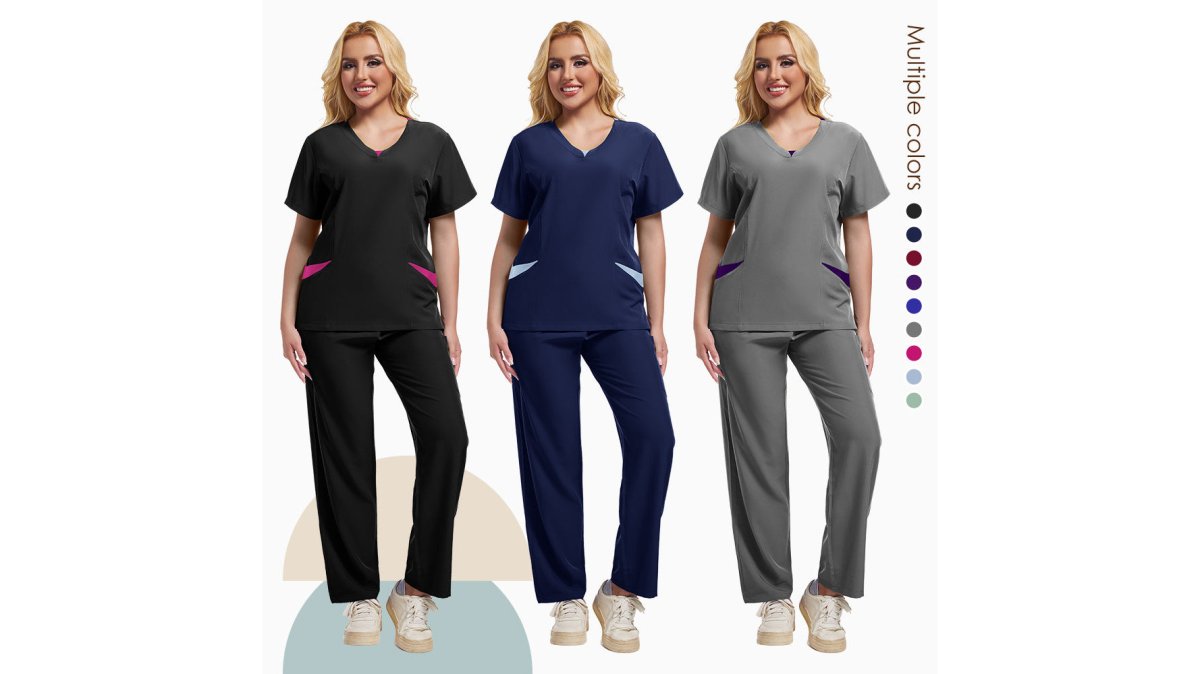
Choose a fitted scrub top that skims your body without clinging. Oversized tops paired with tapered joggers look unbalanced; a fitted top creates proportion.
A simple watch adds polish. Avoid dangling bracelets or rings that harbor bacteria. Stud earrings look more professional than large hoops.
Hair should be neat and pulled back if long. A simple elastic or clip works perfectly.
Clean, trimmed nails with neutral polish look professional. Avoid long nails that could scratch patients or get caught on gloves. Keep makeup minimal and natural-looking.
For most jogger scrubs, a partial tuck at the back looks polished. Tuck just enough to define your waist.
Stand tall with your shoulders back. Well-fitting joggers look even better when standing confidently.
Accessorizing Within Clinical Safety Limits
Accessories add personality while maintaining professional standards and infection control compliance. Understanding the "why" helps you make smart choices.
Watches: Practical and Protocol-Compliant
Watches are essential for monitoring vitals and medication timing. Choose a watch with a silicone or rubber band that can be easily cleaned. Avoid leather bands, fabric straps, or intricate metal designs. The watch should sit loosely enough to slip a finger underneath.
Jewelry: Minimalist Approach Required
Compression Socks: Function Meets Fashion
Badge Holders and ID Accessories
Pockets: Strategic Storage Without Silhouette Disruption
Hair Accessories and Grooming Details
Scent and Fragrance Considerations
Infection Control Protocol: The Underlying Reason
Frequently Asked Questions
How should jogger scrubs fit to look professional?
Jogger scrubs should fit snugly through the thigh and taper toward the ankle without being restrictive. The waistband should sit at your natural waist with minimal excess fabric. Look for a tailored fit that moves with you during active shifts, not baggy, but with enough room for layering compression socks. The cuffed hem should hit just above your ankle bone, creating that polished athletic-inspired silhouette while maintaining clinical standards. Four-way stretch fabrics provide the fitted silhouette that looks professional while allowing full range of motion.
What are the best shoes to wear with jogger scrubs?
Pair jogger scrubs with clean, supportive footwear that complements the athletic aesthetic: white or black leather nursing shoes, minimalist sneakers, or professional slip-ons. Compression socks in neutral colors (black, white, or navy) worn under the cuffed hem create a polished line and add clinical credibility. Avoid heavy athletic sneakers or sandals, which clash with the tailored look. Ensure your shoes meet your facility's dress code, many hospitals require closed-toe, slip-resistant footwear. The key is choosing shoes that feel supportive for 12-hour shifts while maintaining a professional appearance.
Can jogger scrubs work in all healthcare settings?
Jogger scrubs work well in most clinical environments, but always verify your workplace dress code policies first. Operating rooms, surgical centers, and some traditional hospital units may require standard scrub pants instead. Joggers are ideal for nursing floors, urgent care, dental offices, veterinary clinics, and home health settings where modern fit scrubs are welcomed. Check your facility's uniform policy before investing, some conservative healthcare institutions still prefer traditional straight-leg scrub pants. When in doubt, ask your manager or HR department about jogger acceptance.
How do I keep jogger scrubs looking professional after multiple washes?
Choose scrubs made from durable polyester or four-way stretch fabrics that resist fading and shrinking. Wash in cold water, avoid bleach, and dry on low heat to maintain the tailored fit and color vibrancy. Quality fabrics like those in love2wear_scrubs' moisture-wicking sets are designed for frequent washing while retaining their shape and appearance. Fold or hang immediately after drying to prevent wrinkles. Investing in higher-quality scrubs upfront means they'll maintain their polished appearance through months of regular washing, unlike cheaper alternatives that fade and lose their fitted silhouette quickly.