

Scrubs That Don't Ride Up: A 2026 Guide
Table of Contents
- Why Scrubs Ride Up During Movement
- Fabric Composition and Stretch Properties That Prevent Riding Up
- Best Scrubs for Nurses Working Long Shifts
- Scrubs for Thick Thighs: Finding the Right Fit for Your Body Type
- How to Choose Scrubs That Don't Bunch
- Breathability and Thermal Regulation for All-Day Comfort
- Durability and Shape Retention After Multiple Washes
- Conclusion
Last Updated: August 8, 2026
Why Scrubs Ride Up During Movement
Scrubs ride up because fabric lacks sufficient elasticity to move with your body during extended shifts. When you bend, reach, or sit repeatedly, standard fabrics don't stretch far enough or snap back quickly enough to maintain position. Moisture compounds the problem, sweat reduces friction between fabric and skin, making climbing inevitable during a 12-hour shift.
This happens most often when waistbands rely solely on drawstrings without structured support, or when the inseam is cut too short for your leg length. Many healthcare professionals assume the issue is fit when it's actually fabric performance. Scrubs that don't ride up require both the right material science and thoughtful design.
At love2wear_scrubs, we've built our collections specifically to address this frustration. The combination of proper stretch composition, secure waistband engineering, and inseam accuracy prevents the constant tugging that wastes mental energy during critical patient care moments.
Fabric Composition and Stretch Properties That Prevent Riding Up
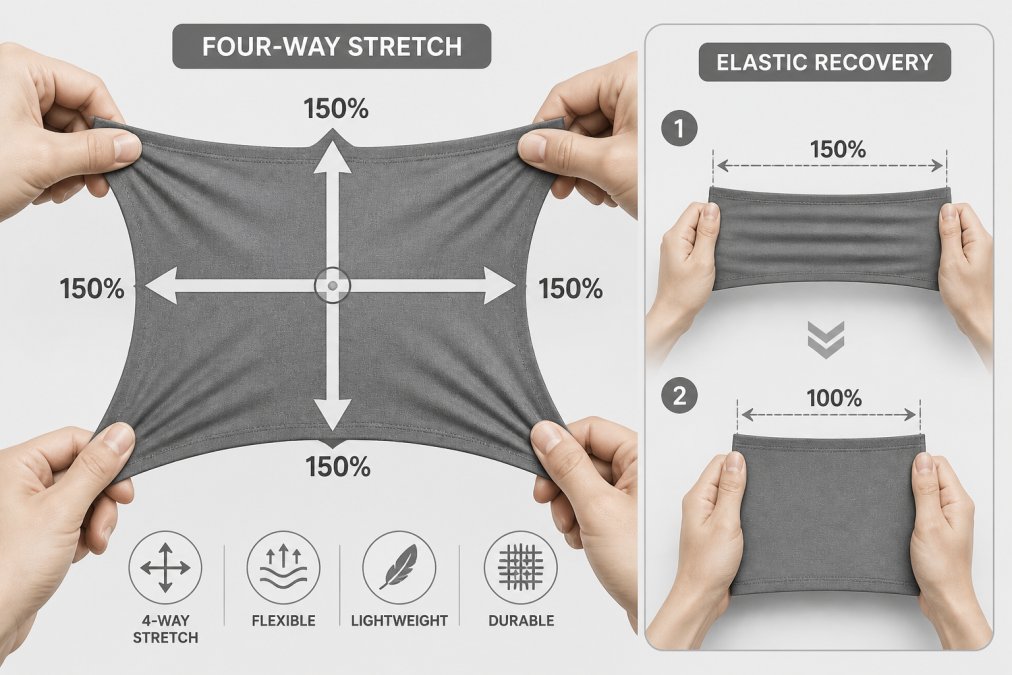
The fabric you choose determines whether your scrubs stay in place or migrate upward throughout your shift. Four-way stretch fabrics, which add diagonal elasticity to vertical and horizontal movement, perform dramatically better during the compound movements of healthcare work: bending while reaching, pivoting while lifting, sitting while documenting.
Four-Way Stretch vs. Two-Way Stretch
Four-way stretch fabrics contain elastane or spandex fibers woven in four directions, allowing movement in every plane. When you bend forward while simultaneously reaching to the side, four-way stretch accommodates both movements without bunching. Two-way stretch handles vertical and horizontal motion but fails during diagonal movements, creating fabric pooling at the hip or thigh.
A nurse performing patient transfers, bending to adjust bed rails, and reaching across counters experiences constant diagonal stress. Two-way stretch scrubs typically begin riding up within 2-3 hours. Four-way stretch scrubs maintain position throughout an entire shift because the fabric recovers completely after each movement.
Testing this yourself is straightforward: perform a full squat while reaching one arm overhead. If fabric bunches at the waist or thighs, you have two-way stretch limitations. If the fabric recovers smoothly to its original position, you have genuine four-way stretch.
Elastane and Spandex Content
Elastane and spandex are identical synthetic fibers that create stretch and recovery in fabric. The optimal range for scrubs that don't ride up is typically 10-15% spandex by weight, enough to provide genuine four-way stretch without overheating during long shifts.
Below 8% spandex, fabric lacks sufficient recovery to snap back after movement. Above 18%, the fabric becomes clingy and traps body heat. Check the fiber content label: "92% polyester / 8% spandex" provides entry-level stretch, while "88% polyester / 12% spandex" provides noticeably better recovery. The type of polyester also matters, high-density polyester blended with spandex provides better shape retention than low-density alternatives.
Moisture-Wicking and Shape Recovery
Moisture-wicking fabrics pull sweat away from skin toward the outer layer, where it evaporates. This matters for riding-up prevention because wet fabric loses friction with skin and slides more easily. Shape recovery refers to how quickly fabric returns to its original dimensions after stretching. Fabrics with poor shape recovery remain stretched out after movement, creating loose areas that sag and ride up.
The combination works this way: as you move and sweat, the moisture-wicking layer pulls liquid away before it can reduce friction. Simultaneously, the spandex-infused fabric snaps back to its original shape, maintaining secure contact with your body.
Best Scrubs for Nurses Working Long Shifts
Nurses working 12-hour shifts need scrubs that maintain position through hundreds of movements while remaining breathable enough to prevent overheating. The best scrubs combine four-way stretch, moisture-wicking technology, and waistband designs that don't rely solely on drawstrings.
American Nurses Association workplace standards emphasize the importance of proper workwear that supports rather than hinders patient care. Scrubs that ride up create distraction and discomfort that impacts focus during critical moments.
Performance Features for Extended Wear
Extended wear demands scrubs engineered for repetitive movement without fatigue. Key performance features include gusseted underarms for full shoulder mobility, reinforced seams at stress points (waistband, crotch, pocket corners), and fabric that resists pilling and fading through multiple wash cycles.
The best long-shift scrubs also feature strategic ventilation panels, usually along the sides or back, that increase airflow without compromising coverage. Pocket placement and depth matter significantly, deep, reinforced pockets that don't sag prevent constant readjustment of tools and phones.
love2wear_scrubs designs specifically for this reality. The modern fit includes strategic pocket placement and reinforced stress points that survive months of active use. The breathable fabric composition prevents the overheating that compounds riding-up problems during extended shifts.
Waistband Stability and Design
The waistband is where most scrubs fail during long shifts. Drawstring-only waistbands rely entirely on consistent tightness; as you move and stretch, the drawstring loosens incrementally, and the waistband slides downward.
Superior waistband designs combine a structured elastic core with a secondary drawstring. The elastic provides baseline security that doesn't loosen with movement, while the drawstring offers fine-tuning. Some premium scrubs add a reinforced waistband band that prevents rolling and folding.
Higher waistbands (sitting at natural waist rather than hip) provide more surface area for secure contact. Testing waistband quality: perform 20 deep squats in succession. If the waistband slides downward noticeably, the design relies too heavily on drawstring tension.
Scrubs for Thick Thighs: Finding the Right Fit for Your Body Type
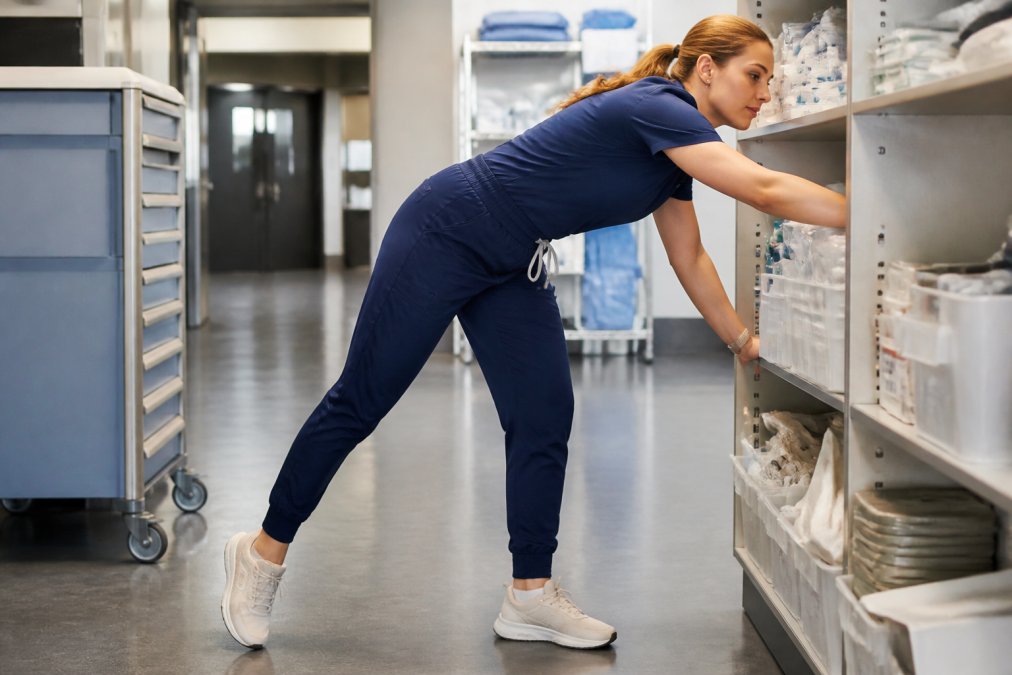
Body type dramatically affects scrub fit and riding-up behavior. Standard sizing assumes a proportional relationship between waist and thigh that doesn't apply to many body types. Scrubs for thick thighs require either tapered cuts that accommodate thigh volume without excess fabric at the waist, or straight-leg designs with sufficient inseam and width to prevent binding.
The common mistake is choosing scrubs based on waist size alone. A person with a 32-inch waist but muscular or fuller thighs will experience severe bunching and riding-up in standard scrubs. The thigh fabric has nowhere to go during movement, creating compression that forces fabric upward.
Tapered vs. Straight-Leg Fits
Tapered scrub pants narrow from hip to ankle, accommodating fuller thighs while maintaining a fitted silhouette at the calf and ankle. This design prevents excess fabric that would bunch and ride up. Straight-leg scrubs maintain consistent width from hip to ankle; for people with thick thighs, they require larger sizes to accommodate thigh volume, which creates excess fabric at the waist and calf.
The choice depends on your body proportions. If your thighs are significantly fuller than your calves, tapered fits prevent riding-up better. If your thigh and calf widths are proportional, straight-leg designs work fine with proper sizing.
Gusseted Crotch and Inseam Design
A gusseted crotch, a diamond-shaped fabric panel at the crotch seam, prevents bunching and riding-up during movement by adding fabric where stress concentrates. Scrubs without gussets create pressure during squatting or high-knee movements, forcing fabric to migrate upward.
Inseam length is equally critical for people with thick thighs. Standard inseams assume proportional leg length to overall height. Someone with shorter legs but thicker thighs needs shorter inseams to prevent excess fabric at the ankle, which contributes to overall bunching and riding-up behavior.
How to Choose Scrubs That Don't Bunch
Choosing scrubs that don't bunch requires evaluating fabric composition, testing stretch and recovery, and assessing waistband design before committing to a purchase. Start by checking fiber content, scrubs with 10-15% spandex content and moisture-wicking polyester provide the foundation for non-bunching performance. Next, evaluate the waistband design: does it combine structured elastic with a drawstring, or rely solely on drawstring tension? Finally, assess inseam options and fit descriptions to ensure the cut matches your body proportions.
Testing for Clingy Fabric and Static Cling
Clingy fabric that adheres to skin creates the illusion of fit while actually reducing movement freedom. Static cling, where fabric sticks to itself or to your body, compounds this problem, making scrubs feel restrictive during movement.
Quality moisture-wicking fabrics resist static cling because the moisture layer reduces electrical charge buildup. Cheaper polyester blends accumulate static, creating that annoying cling where fabric sticks to your legs during movement.
If possible, feel the fabric in person. High-quality scrub fabric feels smooth and slightly slippery, not rough or sticky. If ordering online, read reviews specifically mentioning static cling or clingy feel. Avoid fabrics described as "soft but clingy" or "sticks to your legs."
Post-Wash Performance and Shrinkage Resistance
How scrubs perform after multiple washes determines long-term riding-up behavior. Fabric that shrinks even 2-3% becomes tighter and more prone to bunching. Shape recovery that degrades with washing means the fabric loses elasticity and stops snapping back after movement.
When evaluating reviews, look for specific mentions of fit consistency, pilling, color retention, and elasticity after 10+ washes. Reviews mentioning "held up great for months" or "still fits the same after 20 washes" indicate quality shrinkage resistance.
Washing method affects performance too. Machine washing in cold water with mild detergent, then air-drying, extends fabric life significantly compared to hot water and machine drying.
Breathability and Thermal Regulation for All-Day Comfort
Breathability directly impacts riding-up behavior because overheating increases perspiration, which reduces friction between fabric and skin. Quality breathable scrubs use lightweight polyester blends with strategic ventilation panels. Most high-performance scrubs weigh between 4.5-6 ounces per square yard, balancing breathability with strength.
Ventilation panel placement increases airflow at high-heat areas: sides (where arms move), back (where body heat concentrates), and underarms. Moisture-wicking technology works in tandem with breathability, pulling sweat to the outer layer where it evaporates, rather than trapping moisture against skin.
Testing breathability: wear scrubs during light activity and note how quickly you feel overheated. Quality breathable scrubs maintain comfort even during physical activity. If you feel hot and sticky within 30 minutes of light movement, the fabric lacks adequate breathability for long shifts.
Mayo Clinic guidance on workplace comfort and performance emphasizes how thermal comfort directly impacts cognitive function and focus. Scrubs that cause overheating reduce your ability to concentrate on patient care.
Durability and Shape Retention After Multiple Washes
Durability determines whether scrubs maintain their non-bunching properties for months or degrade within weeks. High-quality scrub fabrics use reinforced seams at stress points (waistband, crotch, pocket corners, armholes) to prevent tearing and unraveling. Triple-stitched seams at high-stress areas extend garment life significantly.
Fiber quality affects durability more than most people realize. Premium polyester resists pilling and maintains color through dozens of wash cycles. Budget polyester pills quickly and fades noticeably after 5-10 washes.
Shape retention determines long-term fit. Scrubs that stretch out after a few washes no longer fit securely and begin riding-up. Premium spandex-infused fabrics maintain shape through 50+ wash cycles. Budget alternatives lose elasticity within 15-20 washes.
Look for manufacturer warranties or guarantees. Some quality brands guarantee scrubs for 12 months of regular use, which indicates confidence in durability. Also check if the brand offers a satisfaction guarantee.
love2wear_scrubs designs with durability as a core principle. The modern fit and breathable fabric composition remain consistent through extended use, preventing the riding-up that develops when scrubs degrade. This commitment to quality without premium pricing makes reliable workwear accessible to healthcare professionals managing tight budgets.
Textile durability standards for medical apparel establish testing protocols that quality manufacturers follow. Checking whether brands meet ASTM standards provides objective durability assessment beyond marketing claims.
Scrubs that don't ride up transform your experience during long shifts by eliminating constant readjustment and discomfort. The combination of four-way stretch fabric, secure waistband design, and proper fit for your body type creates the foundation for all-day stability. love2wear_scrubs delivers this combination, durable, breathable, modern-fit scrubs designed specifically for the demanding reality of healthcare work. Explore the collection and experience how quality workwear removes one significant source of friction from your shift, letting you focus entirely on patient care.
| Feature | Why It Matters | What to Look For |
|---|---|---|
| Four-way stretch | Accommodates complex body movements without bunching | 10-15% spandex content in polyester blend |
| Moisture-wicking | Maintains friction between fabric and skin even during perspiration | Lightweight polyester designed to pull sweat away |
| Secure waistband | Prevents downward migration during movement | Structured elastic combined with drawstring, not drawstring alone |
| Gusseted crotch | Eliminates compression during bending and squatting | Diamond-shaped fabric panel at crotch seam |
| Tapered fit | Accommodates fuller thighs without excess fabric at waist | Narrowing from hip to ankle for proportional silhouette |
| Breathability | Prevents overheating that increases perspiration and riding-up | Lightweight fabric with ventilation panels at sides and back |
| Shape retention | Maintains fit consistency through multiple wash cycles | Fabric that resists pilling and elasticity loss after 50+ washes |
Frequently Asked Questions
What fabric features should I look for to prevent scrubs from bunching?
Look for four-way stretch fabrics with elastane or spandex content (at least 5-8% for optimal recovery). Moisture-wicking synthetics like polyester blends prevent clingy, static-prone fabrics that bunch. High-density fabrics resist bunching better than lightweight materials. Tapered fits with gusseted crotches reduce excess fabric that creates bunching during movement. Test fabric by stretching it, quality scrubs recover their shape immediately rather than staying stretched out.
How do I choose scrubs that don't ride up during long shifts?
Select scrubs with structured waistbands that combine elastic with drawstring security for adjustable hold. Four-way stretch fabric with strong shape recovery prevents sagging and riding up. For best scrubs for nurses working long shifts, prioritize contoured fits with tapered legs that follow your natural body line. High-waisted options provide additional coverage. Always check post-wash performance, shrinkage resistance ensures your scrubs maintain fit consistency through repeated washing, preventing the gradual ride-up that comes from fabric relaxation.
Are scrubs for thick thighs different from standard sizes?
Yes. Scrubs designed for thicker thighs feature gusseted crotches, wider thigh panels, and strategic stretch placement. Straight-leg or relaxed-fit styles provide more room than tapered cuts, reducing fabric tension that causes bunching and riding up. Look for high-density, four-way stretch fabrics that maintain shape under tension. Proper fit prevents the tugging sensation that occurs when fabric is too tight in the thigh area. Many brands now offer ergonomic fits specifically engineered for different body types, ensuring comfort and professional appearance throughout your shift.
How do I know if scrubs will stay in place after washing?
Check the fabric composition, synthetic blends with elastane resist shrinkage better than 100% cotton or rayon. Look for shrinkage-resistant finishes on product descriptions. Read reviews mentioning fit consistency after multiple washes. Test by washing a pair and measuring them before and after to verify shrinkage resistance. Quality scrubs maintain their shape recovery and waistband tension after 20+ washes. Avoid fabrics prone to static cling, which can cause scrubs to shift during movement. Proper care (cold water, gentle cycle) also preserves fit consistency and prevents premature fabric relaxation.
This article was written using GrandRanker