

Why Do My Scrubs Shrink After Washing: A 2026 Guide
Table of Contents
- Why Do Scrubs Shrink in the Wash
- Do Cotton Scrubs Shrink More Than Polyester
- How to Wash Scrubs to Prevent Shrinking
- Drying Techniques That Prevent Scrub Shrinkage
- How to Unshrink Scrub Pants and Restore Fit
- First-Wash Precautions for New Scrubs
- Conclusion
Last Updated: August 7, 2026
Why Do Scrubs Shrink in the Wash
Scrubs shrink because fabric fibers contract when exposed to heat and moisture during laundry. Water causes fibers to swell temporarily; as they dry, they contract and often settle into a smaller shape than before. This fiber contraction is especially pronounced in natural fibers like cotton, which absorb water readily and respond dramatically to temperature changes. Heat accelerates shrinkage significantly, high-heat settings in both wash and dry cycles force fibers to contract more aggressively. Most scrubs experience noticeable shrinkage after just a few washes with standard laundry practices.
How fiber contraction happens during the laundry cycle
Natural fibers like cotton are made of cellulose, which absorbs moisture readily. When water penetrates the fiber, it pushes cellulose chains apart, causing temporary expansion. Once water evaporates during drying, fibers try to return to their original state but often settle into a permanently smaller configuration due to stress from agitation. The washing machine's spin cycle and tumbling action add mechanical stress that compounds this problem, making fibers more pliable and easier to deform. When heat is applied during drying, those deformed fibers set into their new, smaller shape. The detergent you use also matters, harsh detergents strip natural oils that help fibers maintain elasticity, making them more brittle and prone to permanent deformation.
The role of heat in laundry shrinkage
Heat is the primary driver of permanent shrinkage. High-heat washing cycles (130°F or above) soften fibers and make them more susceptible to contraction. Most shrinkage happens during drying, not washing, the dryer's sustained high temperature (140-160°F on standard settings) causes most permanent fiber damage. Professional laundry services use lower temperatures specifically to preserve garment longevity. A cold or warm water wash (below 100°F) causes minimal fiber swelling; combined with air drying or tumble dry low (below 120°F), overall shrinkage is reduced to nearly zero.
Heat exposure is cumulative. A scrub that shrinks just 2-3% per wash will be noticeably smaller after ten washes. This is why first-wash precautions are critical, you're minimizing damage before shrinkage compounds across dozens of laundry cycles.
Do Cotton Scrubs Shrink More Than Polyester
Cotton scrubs shrink significantly more than polyester scrubs. Cotton is a natural fiber that absorbs water readily and responds dramatically to heat exposure. Polyester, a synthetic fiber, resists water absorption and maintains dimensional stability much better across multiple wash cycles. If shrinkage is your primary concern, polyester or poly-cotton blend scrubs are objectively the better choice.
However, pure cotton scrubs feel softer and breathe better during long shifts, which is why many healthcare professionals prefer them despite the shrinkage risk. Love2wear_scrubs offers both options, allowing you to choose based on your priorities and willingness to follow specific care protocols.
Natural fibers vs. synthetic fibers
Natural fibers like cotton are made of cellulose chains with inherent flexibility and moisture-absorption properties. This makes cotton comfortable and breathable but vulnerable to shrinkage, cotton fibers swell when wet and contract when dry, especially under heat. Synthetic fibers like polyester are petroleum-based polymers with rigid molecular structure that don't absorb water the way cotton does, so they swell minimally and shrink even less. For healthcare professionals who can't afford to have scrubs shrink and become uncomfortable, polyester-dominant blends offer practical advantages.
The trade-off is tactile comfort. Many nurses report that pure polyester scrubs feel plastic-like and don't breathe as well as cotton. This is why poly-cotton blends have become the industry standard, they balance the shrinkage resistance of polyester with the comfort and breathability of cotton.
Poly-cotton blends and dimensional stability
A poly-cotton blend typically contains 65% polyester and 35% cotton. This combination offers better shrinkage resistance than pure cotton while maintaining more breathability than pure polyester. Poly-cotton blends still shrink, but at a much lower rate, expect 1-2% shrinkage across the first few washes with proper care, compared to 3-5% for pure cotton. Over the lifetime of the garment, this difference becomes significant. Poly-cotton blends are also more forgiving of temperature variations, making them ideal for busy healthcare professionals who don't always have time for meticulous laundry practices.
How to Wash Scrubs to Prevent Shrinking
Preventing shrinkage starts with understanding that every laundry decision compounds over time. A single wash in hot water might cause only 1-2% shrinkage, but after ten washes, your scrubs have shrunk 10-20%, and the fit is now uncomfortable. Scrubs are designed to withstand professional laundering, but only if you follow the right protocols.
Step 1: Read and follow care instructions
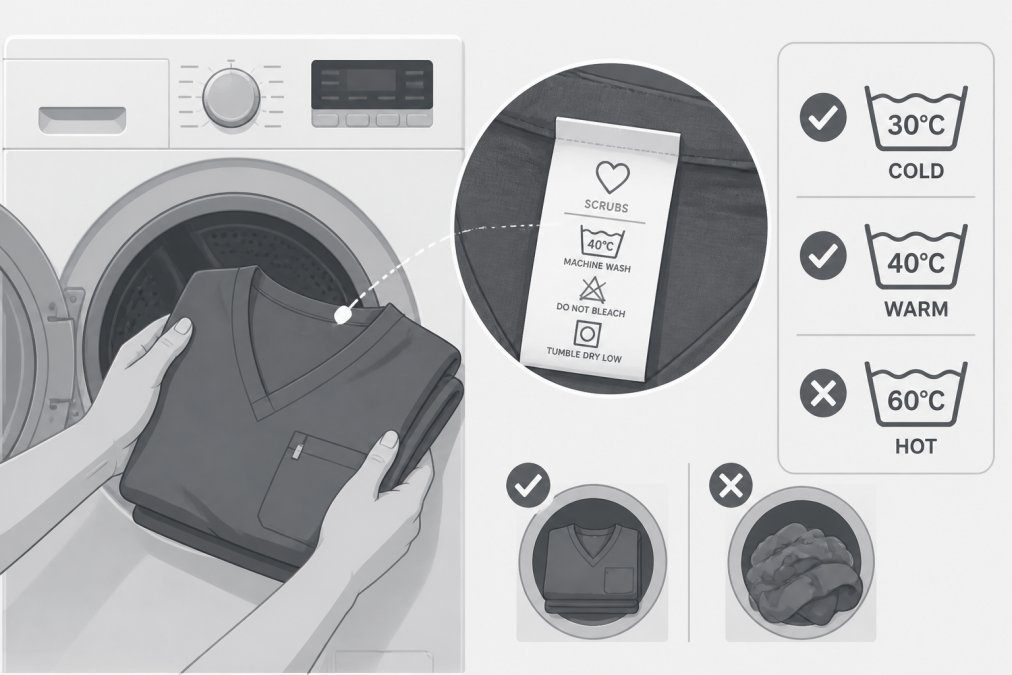
Every scrub comes with a care label specifying the manufacturer's recommended washing temperature, cycle type, and drying method. These instructions reflect testing the manufacturer has done on that specific fabric blend. Check your care label before the first wash for specific temperature recommendations (cold, warm, or hot), cycle type (normal, permanent press, or delicate), and drying instructions (air dry, tumble dry low, or tumble dry medium). Some scrub manufacturers pre-shrink their fabric before cutting and sewing, which means the garment has already experienced controlled shrinkage during manufacturing. The label will often indicate this with language like "pre-shrunk" or "sanforized." Always assume some shrinkage is possible unless the label explicitly states otherwise.
Step 2: Choose the right wash temperature
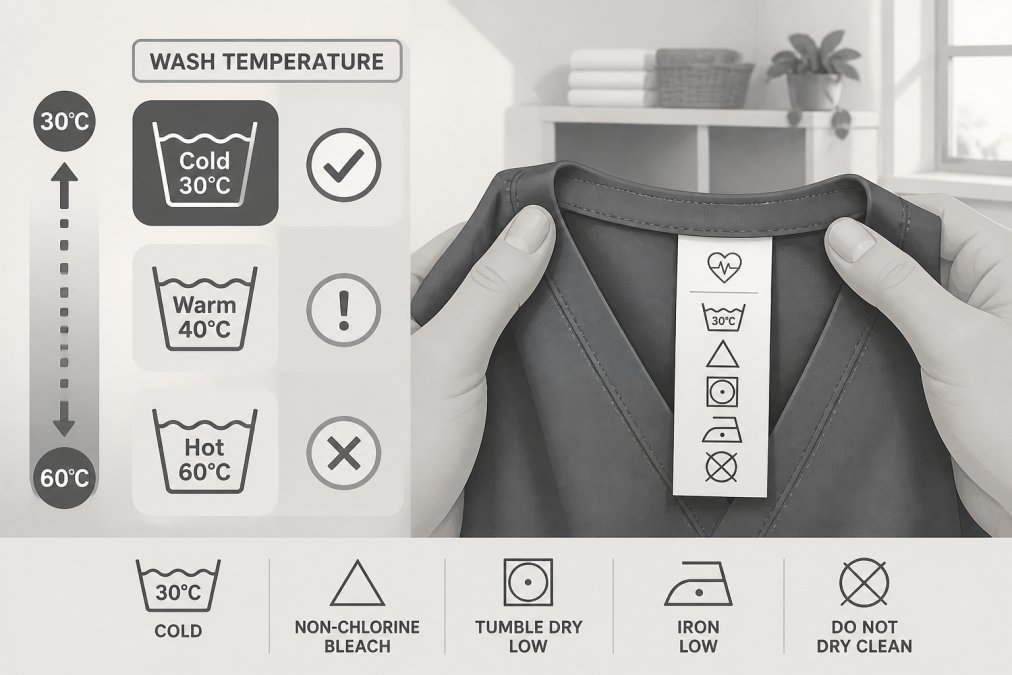
Cold water washing is the gold standard for preventing shrinkage. Cold water (below 60°F) minimizes fiber swelling because fibers don't absorb as much water when temperature is low. If your care label permits warm water (80-100°F), use it as a compromise between shrinkage prevention and cleaning effectiveness. Never use hot water (130°F or above) for scrubs unless your care label explicitly recommends it. Hot water is aggressive on fabric and accelerates shrinkage dramatically. Even if hot water cleans better, the long-term damage to your scrubs isn't worth the short-term cleaning benefit.
Step 3: Select appropriate washing machine settings
Use a gentle or permanent press cycle rather than a heavy-duty normal cycle. The normal cycle uses maximum agitation, which stresses fibers and compounds shrinkage. A permanent press cycle uses gentler tumbling and shorter spin times, reducing mechanical stress on the fabric. Avoid overloading the washing machine, when the drum is too full, clothes don't have enough space to move freely, causing uneven stress. Separate your scrubs from heavier items like jeans or towels, which create additional agitation and friction that damages scrubs.
Step 4: Use the correct detergent type
Use a detergent formulated for delicate or colored fabrics rather than heavy-duty detergents. Heavy-duty detergents are harsher on fabric fibers and weaken them over time. Avoid bleach unless your care label specifically permits it and the scrubs are white. Use the recommended amount of detergent, not more, extra detergent leaves residue that coats fibers and weakens them.
Drying Techniques That Prevent Scrub Shrinkage
Drying is where most permanent shrinkage occurs. A scrub washed in cold water can still shrink significantly if you then throw it in a hot dryer. The drying phase is your last opportunity to prevent shrinkage.
Air drying vs. machine drying
Air drying is the best method for preventing shrinkage. Hanging scrubs on a clothesline, drying rack, or hanger allows them to dry naturally without heat exposure. The fibers relax gradually as moisture evaporates, allowing them to return to their original dimensions. Air-dried scrubs maintain their fit and feel softer than machine-dried scrubs. The downside is that air drying takes 4-8 hours depending on humidity and air circulation. If you must use a machine dryer, use the lowest heat setting available and remove scrubs while still slightly damp, then air dry the remainder.
Tumble dry low settings explained
"Tumble dry low" typically means a dryer temperature below 120°F, significantly lower than the standard setting (140-160°F). At low temperatures, fibers dry more slowly, giving them time to relax and return to their original shape rather than being forced into a permanently smaller configuration. Remove scrubs from the dryer as soon as the cycle ends, don't let them sit in the warm dryer, as residual heat continues to stress fibers. Some dryers have a "delicate" or "air dry" setting that tumbles without heat, which is ideal for scrubs if your dryer offers it.
How to Unshrink Scrub Pants and Restore Fit
If your scrubs have already shrunk, you have options to restore fit before replacing them. These techniques work best on mild to moderate shrinkage (2-5%). Severe shrinkage (10% or more) is often irreversible.
Fabric relaxation techniques
Fabric relaxation involves soaking the garment in cool water with a fabric conditioner or glycerin, then gently stretching it back to its original dimensions while it dries. Fill a bathtub or large sink with cool water (60-70°F) and add a commercial fabric relaxer or one-quarter cup of glycerin. Submerge the scrubs and let them soak for 30 minutes. After soaking, gently squeeze out excess water without wringing. Lay the scrubs on a clean, dry towel and carefully stretch them to match your original size, using a measuring tape to ensure even stretching. Pin the stretched scrubs to the towel to hold them in place while they air dry for 24-48 hours. Once completely dry, the scrubs should fit closer to their original size.
When professional laundering is worth considering
Professional laundry services use industrial equipment and expertise specifically designed to preserve garment fit and longevity. Professional services typically use cold water, gentle cycles, and low-heat drying, all of which preserve fabric integrity. The cost of professional laundering is often comparable to buying replacement scrubs every 6-12 months. If you're replacing scrubs frequently due to shrinkage and poor fit, professional laundering becomes cost-effective. For healthcare professionals who wear scrubs daily and need them to look professional and fit properly, professional laundering is an investment in both comfort and longevity.
First-Wash Precautions for New Scrubs
The first wash is critical because it determines how much shrinkage occurs before you've even worn the scrubs. Many new scrubs shrink noticeably after the first wash if you don't take precautions. Wash new scrubs separately from other clothing, using cold water and a gentle cycle. Don't assume they're pre-shrunk, check the care label to confirm. Use a mild detergent and avoid fabric softener on the first wash, as softener can reduce the effectiveness of any sizing treatments the manufacturer applied.
Air dry your new scrubs rather than using a machine dryer for the first wash. If you must use a dryer, use the lowest heat setting available and remove scrubs while still slightly damp to finish drying. After the first wash and dry, try on the scrubs to assess the fit. If they've shrunk noticeably, use the fabric relaxation techniques described above before they shrink further in subsequent washes. Establishing good laundry habits from the first wash pays dividends across the lifespan of the garment.
Conclusion
Scrub shrinkage is preventable when you understand the mechanics of fiber contraction and apply consistent care practices. Cold water washing, gentle cycles, low-heat drying, and proper detergent selection are the foundation of a shrinkage-prevention routine. Love2wear_scrubs are engineered with durable poly-cotton blends designed to withstand professional laundering and maintain their fit across hundreds of wash cycles when cared for properly. Start with the first wash using these protocols, and your scrubs will maintain their shape and comfort throughout your career.
Frequently Asked Questions
What fabric causes scrubs to shrink the most?
Natural fibers like 100% cotton shrink more readily than synthetic alternatives because cotton fibers absorb moisture and contract when exposed to heat. Poly-cotton blends offer better dimensional stability than pure cotton, though the exact shrinkage rate depends on the blend ratio. Pre-shrunk fabrics undergo treatment to minimize this effect, making them a more reliable choice for scrubs that maintain their fit wash after wash.
Can you unshrink scrubs once they have shrunk?
Partial recovery is possible using fabric relaxation techniques. Soak shrunken scrubs in cool water with a gentle hair conditioner or fabric softener for 15-20 minutes to relax the fibers, then gently stretch them back to shape while damp and lay flat to dry. However, complete restoration to original size is rarely achievable, prevention through proper washing and drying is far more effective than attempting to reverse shrinkage after it occurs.
Should I wash my scrubs in hot or cold water?
Cold water wash is the best choice to prevent shrinkage. Hot water causes fibers to contract more aggressively, especially in natural fabrics like cotton. Cold water effectively removes dirt and stains while minimizing heat exposure. Always check your scrubs' care label for specific temperature recommendations, as some fabrics may have different requirements, but cold water is generally the safest option for uniform maintenance and garment longevity.
Is it better to air dry scrubs to prevent shrinking?
Air drying is the most shrinkage-resistant drying method because it eliminates heat exposure entirely. Hanging scrubs on a clothesline or drying rack allows natural evaporation without the tensile stress that machine dryers create. If you must use a dryer, select tumble dry low settings to minimize fiber contraction. For maximum garment longevity and consistent fit across multiple washes, air drying is the preferred approach for healthcare professionals managing their uniform maintenance.
This article was written using GrandRanker