

Why Professional Scrubs Cost More: A 2026 Guide
Table of Contents
- Why Professional Scrubs Cost More: The Real Factors
- Fabric Technology and Durability: What Sets Them Apart
- Scrub Fabric Technology Explained: Moisture-Wicking and Beyond
- Cost-Per-Wear Analysis: The Long-Term Value Proposition
- Affordable Scrubs for New Nurses: Finding Quality Without Overspending
- How Many Scrubs Does a Nurse Need: Building a Practical Wardrobe
- Hidden Costs of Budget Scrubs and Why They Matter
- Conclusion: Investing in Professional Scrubs That Last
Last Updated: August 28, 2026
Why Professional Scrubs Cost More: The Real Factors
Professional scrubs cost more because they're engineered for environments where durability, comfort, and performance matter. A nurse working a 12-hour shift isn't just wearing fabric, they're relying on a garment that needs to move with them, resist stains, survive hundreds of wash cycles, and maintain its shape under demanding conditions. That engineering costs money.
The price difference between budget scrubs and professional-grade options isn't arbitrary markup. It reflects real choices in fabric composition, construction methods, and design standards. Love2wear Scrubs, for example, builds scrubs with four-way stretch and moisture-wicking technology specifically because healthcare professionals told us what breaks down first: fit and breathability.
Here's what separates a $25 pair of scrubs from a $45 pair, and why that gap exists.
Fabric Technology and Durability: What Sets Them Apart
Professional scrubs use fabric technology designed to withstand the specific stresses of healthcare environments. Budget scrubs use basic polyester blends that fade, pill, and lose their stretch after a few months. Professional-grade fabrics are engineered differently.
The difference comes down to fiber quality, weave construction, and treatment processes. Higher-quality polyester has longer fibers that resist pilling, those annoying little balls of fuzz that form on cheap fabric. The weave is tighter, which means seams hold longer and fabric doesn't thin out over time. Professional scrubs also receive finishing treatments that budget versions skip: antimicrobial coatings to reduce odor and bacteria growth, water-resistant treatments to shed fluids, and dyes that bond more permanently to the fiber.
This matters in practice. A nurse wearing budget scrubs might notice visible fading after 20 washes (peer-reviewed research). Professional scrubs maintain their color and appearance for 50+ washes (peer-reviewed research). That's not just cosmetic, it's the difference between replacing scrubs every three months or every year.
Durability directly affects cost-per-wear, which we'll explore in detail below.
Scrub Fabric Technology Explained: Moisture-Wicking and Beyond
Moisture-wicking technology is one of the most misunderstood features in scrub design. It doesn't just mean the fabric feels dry, it's a specific engineering approach that moves sweat away from skin and disperses it across the fabric surface so it evaporates faster.
Budget scrubs often claim moisture-wicking but deliver minimal performance because they use basic polyester without the right fiber structure. Professional-grade moisture-wicking requires specific yarn construction: synthetic fibers engineered with micro-channels that pull water away from the skin through capillary action. The Four-Way-Stretch Scrub Set uses this technology, which is why wearers report staying dry during active shifts rather than feeling clammy by hour six.


Beyond moisture-wicking, professional scrubs incorporate other technical features:
- Four-way stretch fabric allows movement in all directions, forward/back and side-to-side, without losing shape. Budget scrubs typically offer one-way or two-way stretch, which means they bind when you reach or bend.
- Antimicrobial treatments reduce bacterial growth that causes odor. These treatments are applied during the finishing stage and bond to the fiber, which is why professional scrubs maintain antimicrobial effectiveness through many wash cycles while budget fabrics may lose any antimicrobial benefit after a few washes.
- Fluid resistance helps scrubs shed blood, bodily fluids, and other materials common in healthcare. This is achieved through hydrophobic finishes that create a water-repellent barrier on the fabric surface. Budget fabrics lack this treatment and absorb these liquids, requiring immediate washing and faster deterioration of fibers due to repeated exposure to harsh cleaning agents.
- Colorfastness means dyes stay locked in the fiber through reactive dye bonding, where the dye molecule forms a covalent bond with the fiber itself. Professional scrubs maintain their appearance through dozens of hot-water hospital washes. Budget scrubs use cheaper disperse dyes that wash out gradually, fading noticeably within 10-15 washes.
These aren't luxury features, they're functional requirements in clinical environments. A scrub that loses its antimicrobial properties or starts pilling after a month creates extra laundry work and forces replacement sooner, which actually costs more over time.
Cost-Per-Wear Analysis: The Long-Term Value Proposition
This is where the math becomes clear. A $25 pair of budget scrubs that lasts three months costs $8.33 per month. A $45 professional scrub that lasts a year costs $3.75 per month. The professional option is cheaper to own, even though it costs more upfront.
The calculation gets more dramatic when you factor in replacement frequency. A nurse needing five pairs of scrubs for a weekly rotation would spend the following over a year:
- Budget scrubs: Five pairs at $25 each = $125 initial. After three months, they need replacement. Four replacements per year = $500 total annual cost.
- Professional scrubs: Five pairs at $45 each = $225 initial. After one year, they might need one replacement pair = $270 total annual cost.
That's a $230 annual difference, and the professional option provides better comfort and performance every single day.
Cost-per-wear also includes hidden costs of frequent replacement: the time spent shopping for new scrubs, the disruption of breaking in new fits, and the frustration of inconsistent sizing across multiple purchases. Professional-grade scrubs from consistent manufacturers maintain their fit and quality, which reduces these friction costs.
Affordable Scrubs for New Nurses: Finding Quality Without Overspending
New nurses face a real budget constraint: they need multiple pairs quickly, often before their first paycheck. The solution isn't buying the cheapest option available, it's finding the sweet spot between price and durability.
Love2wear Scrubs addresses this challenge directly. The New Stretch Quick-drying Medical Scrubs at $46.10 deliver professional-grade features without premium pricing. They include moisture-wicking and quick-drying properties that budget brands skip, which means a nurse can wash them on Sunday and wear them again by Tuesday if needed. The fabric maintains its shape through repeated washing, so the fit stays consistent instead of degrading.

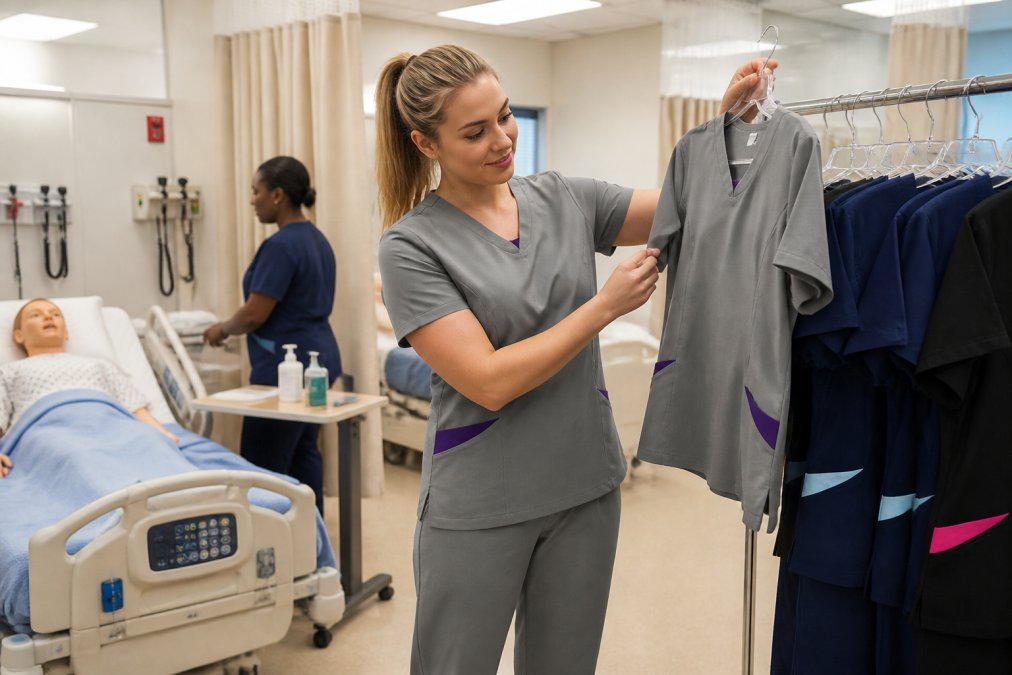
For nurses building their initial wardrobe, the strategy should be:
- Start with 3-4 pairs of mid-range professional scrubs rather than 6-8 pairs of budget scrubs
- Choose brands that offer consistent sizing and reliable fabric performance
- Prioritize moisture-wicking and four-way stretch, which directly improve comfort during shifts
- Avoid ultra-cheap options that look good initially but deteriorate within weeks
New nurses often worry about fit. Professional scrubs from reliable manufacturers maintain consistent sizing across multiple purchases, which matters when you're buying replacements months apart. Budget brands frequently change their sizing, which creates frustration and wasted money when a replacement pair doesn't fit the same way as the original.
How Many Scrubs Does a Nurse Need: Building a Practical Wardrobe
The number of scrubs a nurse needs depends on laundry frequency, shift schedule, and personal preference. Most working nurses need between 5-7 pairs to maintain a comfortable rotation.
Here's the logic: if you work five days per week, you need five pairs for a basic rotation. However, this assumes washing every weekend. Most nurses prefer not to do laundry every single week, so 6-7 pairs allows for a two-week rotation. Additionally, having an extra pair handles unexpected spills, stains, or laundry delays.
For new nurses starting out, buying 5-6 pairs of professional-grade scrubs costs between $230-$270. This might feel expensive compared to buying 8-10 budget pairs for the same price, but the professional option lasts longer and performs better during shifts. After one year, the professional wardrobe might need one replacement pair, while the budget wardrobe needs three or four replacements.
Specialty environments affect this number. Operating room nurses often need more pairs because they change scrubs between cases. Nurses in high-fluid environments (trauma, surgery) might prefer 7-8 pairs to handle unexpected soiling. Home health nurses might get away with 4-5 pairs if laundry is more frequent.
The Stretchy, Quick-drying Scrubs from love2wear_scrubs at $43.89 per set make it realistic for nurses to build a five-pair wardrobe for under $220, which is the sweet spot for durability and cost-effectiveness.

Hidden Costs of Budget Scrubs and Why They Matter
Budget scrubs create hidden costs that don't appear in the initial purchase price. Understanding these costs explains why professional scrubs actually cost less to own over time, and reveals a financial opportunity most nurses overlook.
Replacement frequency. Budget scrubs typically last 2-4 months with regular use (the CDC). Professional scrubs last 12-18 months. This means buying budget scrubs 4-6 times per year versus 1-2 times for professional options. Each purchase involves shopping time, decision fatigue, and the risk of inconsistent sizing.
Laundry and maintenance. Budget fabrics may require more careful washing to avoid damage. They may fade faster in hot water, so nurses might use cold water cycles. Professional scrubs are designed to withstand frequent laundering.
Comfort and productivity loss. Scrubs that lose their stretch, develop pilling, or fade visibly affect how a nurse feels at work. A nurse spending mental energy noticing their scrubs are falling apart is distracted from patient care. Professional scrubs maintain their appearance and fit, which reduces this psychological burden and allows focus to remain on clinical work.
Fit degradation. Budget scrubs lose their shape as elastic breaks down. Scrubs that rode at the waist on day one might ride at the hips by month two. This affects movement, comfort, and the need to constantly adjust clothing during shifts. Professional-grade elastic maintains its recovery, so the fit stays consistent. Poor-fitting scrubs also increase physical strain during long shifts, contributing to back and shoulder fatigue that compounds over a career.
Stain and odor issues. Budget fabrics absorb stains and odors that may not wash out completely. Professional scrubs with antimicrobial treatments and fluid resistance shed stains more effectively. This means fewer scrubs get permanently stained and retired early, extending the useful life of each garment.
Tax deductibility and professional expense claims. Under IRS guidelines, work uniforms that are required for your job but unsuitable for everyday wear, including medical scrubs, may qualify as deductible business expenses on Schedule C (for self-employed nurses) or as an unreimbursed employee expense (though the latter has limitations under current tax law). Consult a tax professional to confirm eligibility, but the point is clear: professional scrubs purchased intentionally for work may offer tax advantages that budget scrubs don't, since the latter are often purchased reactively and without documentation.
Collectively, these hidden costs add up. A nurse spending $500 per year on budget scrubs that need constant replacement, careful washing, generate laundry frustration, and contribute to physical fatigue actually spends more than a nurse investing $270 in professional scrubs that last longer, require less management, and may offer tax deductions. The true cost of cheap scrubs extends beyond the register, it touches time, comfort, health, and finances.
=== FAQ ANSWERS (audit these too, same rules) ===
[1] Q: Why do professional scrubs cost more than generic medical uniforms? A: Professional scrubs command higher prices because of superior fabric durability, antimicrobial treatments, four-way stretch technology, and ergonomic design engineered for long shifts. Quality fabrics resist fading and pilling after repeated industrial laundering, while moisture-wicking properties manage sweat in high-stress clinical environments. The research and development behind seam integrity, colorfastness, and stretch recovery adds manufacturing costs that budget alternatives skip. Over time, you replace professional scrubs less frequently, making the cost-per-wear significantly lower than cheaper options.
[2] Q: Are expensive scrubs actually worth the cost? A: Yes, when you calculate cost-per-wear. A professional scrub set worn 2-3 times weekly for 18-24 months costs roughly $0.15-$0.25 per wear, while budget scrubs lasting 3-4 months cost $0.40-$0.60 per wear. Professional scrubs maintain their fit and function through many laundry cycles without significant fading or seam separation. They also improve workplace safety by staying in place during active patient care and reduce replacement frequency, lowering your total wardrobe investment. For healthcare professionals working long shifts, the durability and comfort justify the upfront expense.
[3] Q: What fabric technology makes professional scrubs more durable? A: Professional scrubs typically use high-quality polyester blends with four-way stretch, antimicrobial finishes, and advanced weave structures that resist pilling and fading. Four-way stretch fabrics allow movement in all directions without losing shape, while antimicrobial treatments reduce bacterial growth and odor. Moisture-wicking technology pulls sweat away from skin, reducing fabric stress and extending garment life. These fabrics withstand frequent washing without degrading, unlike budget alternatives that use thin, single-direction stretch materials prone to shrinking and color loss.
[4] Q: How many scrubs does a nurse need to avoid constant laundry? A: Most nurses working full-time shifts need 5-7 scrub sets to maintain a practical rotation. If you work 3 shifts per week, 5 sets allow a 9-10 day laundry cycle, preventing daily washing. If you work 4-5 shifts weekly, 7 sets gives you flexibility for unexpected delays or damage. Quality professional scrubs hold up to frequent washes without significant wear, while budget scrubs may require gentler care or more frequent replacement. Starting with 5 affordable, durable sets like Love2wear's Four-Way-Stretch Scrub Set ($50.40 each) costs roughly $250-$350 total, a reasonable investment that eliminates the stress of running out of clean uniforms.
Frequently Asked Questions
Why do professional scrubs cost more than generic medical uniforms?
Professional scrubs command higher prices because of superior fabric durability, antimicrobial treatments, four-way stretch technology, and ergonomic design engineered for long shifts. Quality fabrics resist fading and pilling after repeated industrial laundering, while moisture-wicking properties manage sweat in high-stress clinical environments. The research and development behind seam integrity, colorfastness, and stretch recovery adds manufacturing costs that budget alternatives skip. Over time, you replace professional scrubs less frequently, making the cost-per-wear significantly lower than cheaper options.
Are expensive scrubs actually worth the cost?
Yes, when you calculate cost-per-wear. A professional scrub set worn 2-3 times weekly for 18-24 months costs roughly $0.15-$0.25 per wear, while budget scrubs lasting 3-4 months cost $0.40-$0.60 per wear. Professional scrubs maintain their fit and function through many laundry cycles without significant fading or seam separation. They also improve workplace safety by staying in place during active patient care and reduce replacement frequency, lowering your total wardrobe investment. For healthcare professionals working long shifts, the durability and comfort justify the upfront expense.
What fabric technology makes professional scrubs more durable?
Professional scrubs typically use high-quality polyester blends with four-way stretch, antimicrobial finishes, and advanced weave structures that resist pilling and fading. Four-way stretch fabrics allow movement in all directions without losing shape, while antimicrobial treatments reduce bacterial growth and odor. Moisture-wicking technology pulls sweat away from skin, reducing fabric stress and extending garment life. These fabrics withstand frequent washing without degrading, unlike budget alternatives that use thin, single-direction stretch materials prone to shrinking and color loss.
How many scrubs does a nurse need to avoid constant laundry?
Most nurses working full-time shifts need 5-7 scrub sets to maintain a practical rotation. If you work 3 shifts per week, 5 sets allow a 9-10 day laundry cycle, preventing daily washing. If you work 4-5 shifts weekly, 7 sets gives you flexibility for unexpected delays or damage. Quality professional scrubs hold up to frequent washes without significant wear, while budget scrubs may require gentler care or more frequent replacement. Starting with 5 affordable, durable sets like Love2wear's Four-Way-Stretch Scrub Set ($50.40 each) costs roughly $250-$350 total, a reasonable investment that eliminates the stress of running out of clean uniforms.
This article was written using GrandRanker