

Best Scrub Fabrics for Sensitive Skin
Table of Contents
- Why Scrub Fabric Matters for Sensitive Skin
- Cotton vs Polyester Scrubs for Sensitive Skin
- Hypoallergenic Scrub Materials and Fabric Weaves
- How to Care for Scrubs to Prevent Skin Irritation
- Key Features to Look for in Sensitive-Skin Scrubs
- Conclusion
Last Updated: August 29, 2026
Why Scrub Fabric Matters for Sensitive Skin
Healthcare professionals spend 8-12 hours daily in scrubs, making fabric choice far more critical than most realize (bls.gov). The best scrub fabrics for sensitive skin aren't just about comfort, they directly impact dermatitis risk, infection control, and your ability to perform your job without constant irritation. The wrong fabric choice can lead to contact dermatitis, rashes, and persistent itching that distracts you during patient care.
Your skin barrier takes a beating during long shifts. Friction from fabric rubbing against your body, sweat trapped against your skin, and repeated washing all compound the problem. The fabric you choose either protects that barrier or attacks it. Cotton-based materials breathe differently than polyester blends. Weave patterns affect how much friction your skin experiences. Even detergent residue left in fibers can trigger reactions hours after you put on clean scrubs.
This matters because sensitive skin isn't just uncomfortable, it's unprofessional. Visible rashes, constant scratching, and the distraction of skin irritation all undermine your credibility and focus. The right fabric can help eliminate that problem entirely.

Cotton vs Polyester Scrubs for Sensitive Skin
The choice between cotton and polyester blends is the foundational decision for anyone with sensitive skin. Pure cotton and polyester-cotton blends perform fundamentally differently, and understanding those differences prevents costly mistakes.
Pure Cotton: Breathability and Absorbency
Pure cotton scrubs dominate when breathability is the priority. Cotton fibers are naturally hollow, allowing air circulation that keeps moisture away from your skin (peer-reviewed research). This breathability prevents the sweat buildup that triggers contact dermatitis and yeast growth in warm, moist environments.
Cotton's absorbency is equally important. Unlike synthetic fibers that repel moisture, cotton wicks sweat away from your body. During a 12-hour shift in a busy ER or operating room, this difference compounds. Your skin stays drier, reducing friction and the maceration (softening and breakdown) that happens when skin stays wet too long.
The real advantage emerges in how cotton ages. Pure cotton actually softens with washing, becoming gentler on sensitive skin over time. The fibers relax, reducing pilling and the micro-abrasions that synthetic fabrics create. A cotton scrub worn for two years can feel better than it did new, the opposite of polyester blends that can stiffen and pill with repeated washing.
The tradeoff is durability. Cotton wrinkles more easily, requires more frequent pressing, and can lose its shape faster than blended fabrics. For someone working 12-hour shifts and needing minimal maintenance, this matters. However, for anyone with dermatitis, eczema-friendly fabric choices, or severe textile sensitivity, pure cotton's breathability advantage can outweigh the wrinkle issue.
Love2wear_scrubs' Short Sleeve Thin Style Lab Coat at $47.22 delivers pure cotton construction in a leisure fit designed for comfort during extended shifts.

Polyester Blends: Durability and Wrinkle Resistance
Polyester-cotton blends (typically 65% polyester, 35% cotton) solve the durability problem. These blends resist wrinkles, maintain their shape through dozens of washings, and dry faster than pure cotton. For busy professionals who need grab-and-go convenience, polyester blends make sense operationally.
The tradeoff is moisture management. Polyester doesn't absorb sweat, it repels it. That moisture sits on your skin longer, increasing friction and creating the warm, humid environment where skin irritation thrives. Polyester also generates static electricity, which can increase skin irritation through micro-shocks and friction amplification.
Polyester blends do offer one advantage for sensitive skin: they're easier to rinse clean during laundering. Detergent residue, a major trigger for contact dermatitis, rinses out more easily from synthetic fibers than from cotton's absorbent structure. If you have a detergent sensitivity, polyester blends might actually perform better despite their moisture-management drawbacks.
The moisture-wicking capabilities marketed on many polyester blends are real but limited. Modern polyester fabrics with moisture-wicking technology move sweat away from your skin faster than basic polyester, but still not as effectively as cotton. They're an improvement, not a solution.
Love2wear_scrubs' White Coat With A Western-style Scrub Set at $40.90 uses a polyester-cotton blend, making it practical for professionals prioritizing durability and low maintenance.

| Fabric Type | Breathability | Absorbency | Wrinkle Resistance | Durability | Best For |
|---|---|---|---|---|---|
| Pure Cotton | Excellent | High | Poor | Moderate | Sensitive skin, long shifts |
| Polyester Blend | Good | Low | Excellent | High | Low-maintenance, active roles |
| Bamboo Viscose | Very High | Very High | Fair | Moderate | Severe sensitivity, eczema |
| Organic Cotton | Excellent | High | Poor | Moderate | Chemical-sensitive skin |
Hypoallergenic Scrub Materials and Fabric Weaves
Beyond fiber content, how those fibers are woven together dramatically affects skin irritation. Two scrubs made from identical cotton can perform completely differently based on their weave pattern. This is where most guides miss the actual science.
Poplin and Twill Weaves for Friction Reduction
Poplin weave uses a simple over-under pattern that creates a smooth, flat surface. This smoothness is the key advantage for sensitive skin. Less surface texture means less friction against your skin during movement. When you're reaching for supplies, bending over patients, or moving quickly through a shift, that reduced friction prevents the micro-abrasions that trigger irritation.
Twill weave creates diagonal ridges by floating yarns across multiple threads before going under. This creates more surface texture than poplin, which sounds worse for sensitive skin, and it is, if friction is your concern. However, twill's structure provides superior durability and wrinkle resistance. The diagonal pattern also distributes pressure more evenly across your body, reducing pressure points that can trigger dermatitis in high-friction areas like armpits and waistbands.
The choice between poplin and twill depends on your specific sensitivity. If your dermatitis is friction-triggered (worse in areas that move most), poplin wins. If your sensitivity is pressure-triggered (worse at seams, waistbands, and fitted areas), twill's pressure distribution helps more.
Plain weave, the most basic structure, creates the tightest fabric with the least give. This sounds good for durability but actually increases friction because the fabric doesn't move with your body. Your skin experiences constant micro-rubbing as the fabric resists your movement. Avoid plain weave for sensitive skin unless you have no other option.
Organic Cotton and Bamboo Viscose Options
Organic cotton eliminates pesticide and chemical residue that can trigger contact dermatitis in chemically-sensitive individuals. The fiber itself is identical to conventional cotton, but the growing process matters. Conventional cotton farming uses synthetic pesticides that can remain in trace amounts even after processing. For someone with multiple chemical sensitivities, organic cotton removes that variable.
Bamboo viscose (also called bamboo rayon) offers high breathability and absorbency. Bamboo fibers are naturally hollow and absorbent, even more so than cotton. The fabric drapes softly, reducing friction points. Bamboo viscose also has natural antimicrobial properties, reducing odor and bacterial growth, a real advantage during long shifts when moisture accumulates.
The limitation is durability. Bamboo viscose weakens when wet, making it prone to tearing during washing and wringing. It also wrinkles more than cotton and requires careful handling. For someone willing to hand-wash or use gentle cycles, bamboo viscose is a good option for severe sensitivity. For someone needing practical, everyday durability, it can be impractical.
Dermatologists consistently recommend natural fibers (cotton, bamboo) over synthetics for sensitive skin. The reasoning is simple: natural fibers breathe and absorb moisture, synthetic fibers trap heat and moisture. This aligns with how your skin's barrier function actually works.
How to Care for Scrubs to Prevent Skin Irritation
Even the best fabric becomes a liability if you launder it wrong. How you wash, dry, and store scrubs directly determines whether they protect or irritate your skin.
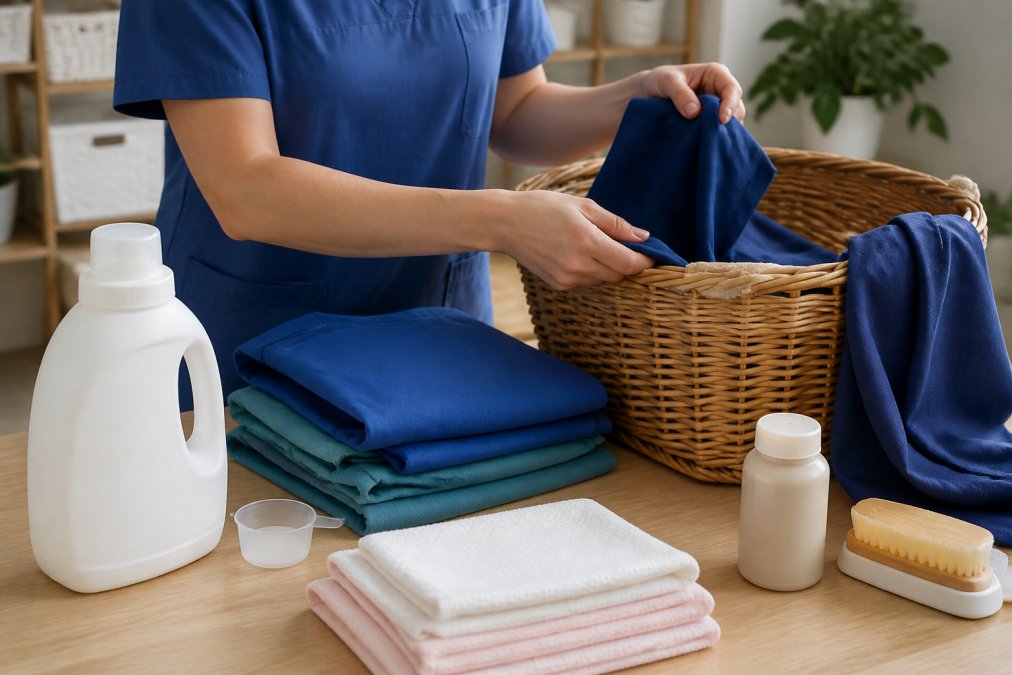
Detergent Selection and Wash Temperature
Detergent residue is one of the most underestimated triggers for contact dermatitis. Standard laundry detergents contain surfactants, optical brighteners, and perfumes that can remain in fabric fibers even after rinsing. When you wear scrubs all day, that residue contacts your skin continuously.
The fix is simpler than most people think: use fragrance-free, dye-free detergent specifically formulated for sensitive skin. These detergents use gentler surfactants that rinse out completely. Brands designed for baby clothes or eczema-prone skin work well for scrubs. The cost difference is minimal, often cheaper than standard detergent.
Water temperature matters more than most realize. Hot water opens fabric fibers, allowing deeper detergent penetration but also making residue harder to rinse completely. Warm water (around 110°F) provides adequate cleaning while minimizing residue buildup (the FDA). Cold water works for lightly soiled scrubs but may leave detergent in the fabric if you're dealing with visible stains or heavy soiling.
Double-rinsing is worth the extra cycle time. Run an additional rinse cycle with no detergent to remove residual soap. This single step can prevent most detergent-triggered irritation. Many people skip this, thinking one rinse is sufficient, it isn't, especially with sensitive skin.
Fabric softener is a common mistake. Softeners coat fabric fibers with silicone-based compounds that reduce breathability and trap moisture against your skin. For someone trying to prevent skin irritation, fabric softener actively works against that goal. Skip it entirely.
Drying Methods and Fabric Maintenance
Air drying preserves fabric integrity better than machine drying, but machine drying is faster and more practical for busy professionals. If you use a dryer, use the lowest heat setting. High heat damages cotton fibers, making them stiffer and more prone to pilling, both of which increase friction against your skin.
Remove scrubs from the dryer while slightly damp and hang them to finish drying. This prevents over-drying, which stiffens fibers and increases wrinkle formation. It also reduces the static electricity that can irritate sensitive skin.
Store scrubs in a clean, dry space away from perfumed products. Fabric softener sheets, scented drawer liners, and perfumed storage containers all leave residue on fabric. Your scrubs absorb these scents and chemicals, which then contact your skin all day. Use unscented storage methods only.
Washing new scrubs before wearing them removes manufacturing chemicals and sizing compounds applied during production. Most people skip this step, then wonder why new scrubs irritate their skin immediately. One wash in cold water with fragrance-free detergent eliminates this problem.
Key Features to Look for in Sensitive-Skin Scrubs
When evaluating scrubs, focus on these specific features rather than marketing claims about "sensitive skin" or "hypoallergenic" labels that often mean nothing.
Fiber content transparency. The product should clearly state the percentage of cotton, polyester, and any other fibers. Vague descriptions like "cotton blend" don't tell you whether it's 90% cotton or 30% cotton. Higher cotton content generally means better breathability for sensitive skin, with 100% cotton or 85%+ cotton being ideal.
Seam construction details. Flat-felled seams (where seam edges are folded and stitched flat) create less friction than standard seams. Some manufacturers highlight this; many don't. If seam construction isn't mentioned, assume standard construction, which means more friction points.
Weight specification. Lighter-weight fabrics (4-6 ounces per square yard) breathe better than heavier weights (7+ ounces). The weight should be listed in product specifications. Lighter weight also means less thermal regulation in cold environments, so balance breathability with your work setting.
Pocket depth and construction. Deep pockets reduce the need to carry items in your hands or waistband, which reduces friction and pressure points. Reinforced pocket corners prevent tearing that creates rough edges irritating to sensitive skin. Check if pockets are mentioned as reinforced or double-stitched.
Neck and cuff design. Ribbed or elastic trim at necklines and cuffs can irritate sensitive skin through constant friction. Look for flat, unribbed trim or generous spacing that prevents the fabric from sitting too tightly against your skin.
Wash-fastness rating. Fabrics rated for 100+ industrial washes maintain color and structure better than those rated for 50 washes. Better wash-fastness means less pilling and fiber degradation, which keeps the fabric smoother against your skin over time.
Conclusion
The best scrub fabrics for sensitive skin prioritize breathability, absorbency, and friction reduction over durability and wrinkle resistance. Pure cotton with poplin or twill weaves delivers high performance for skin health, while polyester blends can work well for professionals who need low-maintenance practicality.
Love2wear_scrubs delivers both options. Our cotton-based scrubs provide the breathability and absorbency that sensitive skin requires, while our polyester-cotton blends offer durability without sacrificing too much skin comfort. With careful attention to detergent selection, wash temperature, and drying methods, you can extend the life of your scrubs while protecting your skin barrier through long shifts. Start with pure cotton if you have active dermatitis, then evaluate polyester blends once your skin stabilizes. Your skin will tell you what works, listen to it, and choose fabric accordingly.
Frequently Asked Questions
Q: Are cotton scrubs better for sensitive skin?
A: Cotton scrubs are often a good choice for sensitive skin because they are naturally breathable, hypoallergenic, and absorbent. Cotton allows air circulation and reduces moisture buildup that can trigger dermatitis and contact irritation. However, the quality matters: 100% organic cotton or high-quality cotton blends can perform better than lower-grade cotton. Polyester blends can work too if they contain at least 50% cotton, but pure synthetic fabrics may trap heat and sweat, increasing irritation risk during long shifts.
Q: What fabric weave is best for reducing skin irritation?
A: Poplin and twill weaves are often recommended for sensitive skin because they can reduce friction against the skin. Poplin offers a smooth, flat surface with minimal texture, while twill provides diagonal ribbing that distributes pressure more evenly. These weaves can help minimize contact dermatitis compared to looser weaves. The tighter construction can also improve wash-fastness and durability, meaning colors and fabric integrity may last longer, potentially reducing the need for frequent replacement that can stress sensitive skin.
Q: How should I wash scrubs to prevent skin irritation?
A: Use fragrance-free, hypoallergenic detergent and wash scrubs in warm water (not hot, which can damage fibers and irritate skin). Avoid fabric softeners and bleach, as these can leave residues that trigger reactions. Dry on low heat or air-dry to preserve fabric integrity and prevent shrinkage. Wash new scrubs before wearing to remove manufacturing chemicals and finishes. Consider a second rinse cycle to remove all detergent residue, which is especially important for those with eczema or contact dermatitis.
Q: What makes hypoallergenic scrub materials different?
A: Hypoallergenic scrub materials are often processed to remove irritants like dyes, chemical finishes, and sizing agents that can trigger allergic reactions. Organic cotton and bamboo viscose are examples of materials that can be considered hypoallergenic. These fabrics may also feature antimicrobial properties and superior moisture-wicking, which can help prevent sweat accumulation and bacterial growth that might worsen skin conditions.
This article was written using GrandRanker