

How to Find Scrubs That Fit: The Complete Guide
Table of Contents
- How to Measure for Scrubs
- Understanding Scrub Sizing Charts
- How Scrub Tops Should Fit
- How Scrub Pants Should Fit
- Best Scrubs for 12 Hour Shifts
- Flattering Scrub Styles for Different Body Types
- Fabric Blend Impact on Fit and Durability
- Common Fitting Mistakes to Avoid
Last Updated: August 22, 2026
How to Measure for Scrubs
Getting accurate body measurements is the foundation of finding scrubs that fit properly. Taking precise measurements takes just 10 minutes and eliminates guesswork entirely (the CDC).
Measure while wearing minimal clothing, a fitted t-shirt and underwear work well. Use a soft measuring tape and keep it parallel to the ground. Have someone assist you if possible, as it's difficult to measure yourself accurately, especially for back and shoulder measurements. Write down each measurement and keep the list handy when shopping for scrubs.
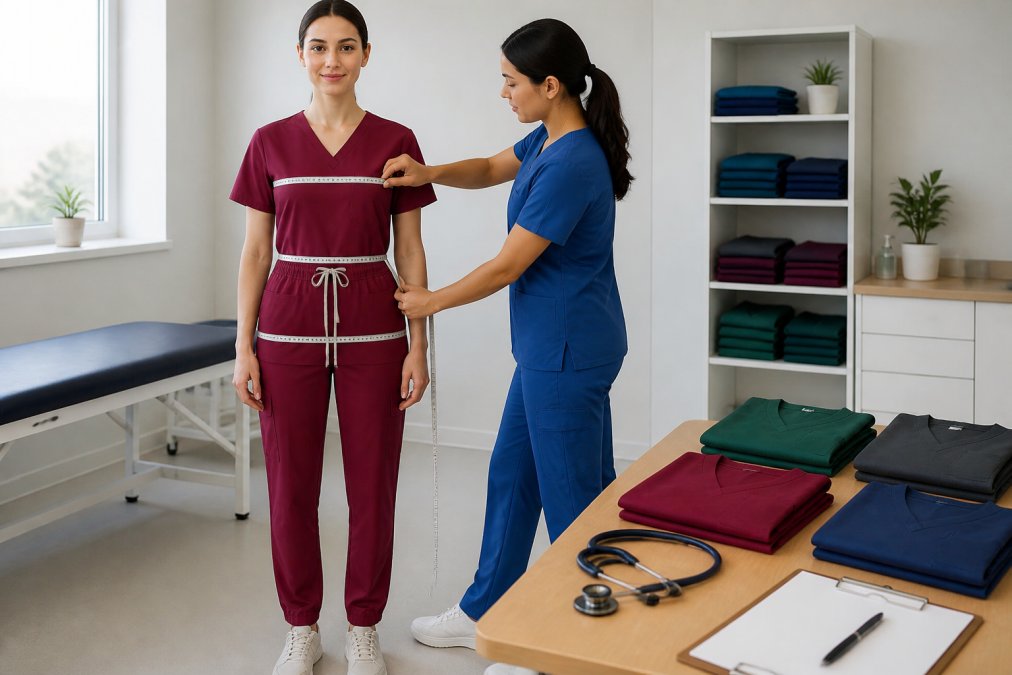
Bust and Chest Measurement
Measure across the fullest part of your chest, keeping the tape snug but not tight. This measurement determines whether a scrub top will fit comfortably across your shoulders and chest without pulling at the buttons or creating gaps. A top that's too tight restricts movement and creates visible pulling at the seams, while one that's too loose bunches up and looks unprofessional.
Waist and Hip Circumference
Measure your natural waist, the narrowest part of your torso, typically just above your belly button. Then measure your hip circumference at the fullest point, usually about 8 inches below your waist. Both measurements matter for scrub pants fit. Many healthcare professionals find that their waist and hip measurements differ significantly, which is why reading the full size chart matters more than just your waist number. Love2wear Scrubs provides detailed size charts that account for both measurements, making it easier to find pants that fit your actual proportions.
Inseam and Length
Inseam is the distance from your inner thigh down to your ankle. Stand barefoot with your feet about 12 inches apart and have someone measure from your groin area straight down to the top of your foot. Proper inseam length matters because pants that are too long drag on the floor, creating a safety hazard, while pants that are too short ride up when you sit or bend. The ideal scrub pants should hit just above your shoe, with a slight break at the ankle.
Shoulder Width and Armhole
Measure from the tip of one shoulder to the tip of the other shoulder across the back. This measurement ensures that scrub tops won't pull across your shoulders or create uncomfortable gaps in the armholes. An armhole that's too tight restricts your range of motion, while one that's too loose allows fabric to bunch under your arms. When trying on scrubs, check that you can raise your arms overhead without feeling restricted.

Understanding Scrub Sizing Charts
Scrub sizing charts look different from street clothing charts because scrubs are cut to allow for movement and layering, which means they typically run larger than regular clothes. Most scrub brands use a combination of measurements, bust, waist, hip, and inseam, to determine the right size. The key is matching your specific measurements to the chart rather than relying on a single number.
Street Size vs. Scrub Size
A common mistake is assuming your street clothing size translates directly to scrubs. Someone who wears a medium in regular clothing might need a small or medium in scrubs, depending on the brand and cut. Scrubs are designed with extra room for movement, layering, and comfort during long shifts. Love2wear Scrubs provides clear sizing charts that show the exact measurements for each size, eliminating the guesswork.
Reading and Using Size Charts
When you look at a size chart, match your measurements to the row that fits most of your dimensions. If your bust measurement falls between two sizes, consider the fit style, tapered cuts run smaller, while straight cuts run larger. Pay attention to the specific measurements listed in the chart, not just the size label. A medium from one brand might be quite different from a medium from another. Taking time to read the full chart prevents ordering the wrong size and dealing with returns.
How Scrub Tops Should Fit
A properly fitting scrub top provides comfort, allows full range of motion, and maintains a professional appearance throughout your shift. The fit should feel relaxed but not baggy, with enough room to move freely without excess fabric bunching. The right fit allows you to raise your arms, bend forward, and reach across your body without feeling restricted or exposing your torso.
Length and Tuck-In Placement
Scrub top length should reach approximately mid-hip or just below your hip bone. This length provides coverage when you're bending or reaching, which is essential in patient care settings. For tops that are meant to be tucked in, the length should allow you to tuck the fabric fully without creating excess bulk at your waist. Love2wear Scrubs designs tops with versatility in mind, offering lengths that work well either tucked or untucked.
Sleeve Length and Armhole Comfort
Sleeve length should reach your wrist bone when your arms hang naturally at your sides. Sleeves that are too short look unprofessional and don't provide adequate coverage, while sleeves that are too long bunch at your wrists and get in the way during patient care. The armhole should sit snugly against your shoulder without pulling or creating gaps, allowing you to raise your arms overhead and rotate your shoulders without feeling restricted.
How Scrub Pants Should Fit
Scrub pants are the foundation of your comfort during long shifts. Proper fit means the waistband sits at your natural waist without digging in, the rise is proportional to your torso length, and the inseam length hits at the right spot on your ankle. The waistband should be snug enough to stay in place when you bend and move, but not so tight that it restricts your breathing. Many healthcare professionals appreciate a drawstring or elastic waistband that adjusts throughout the day.
Waist, Rise, and Natural Waist Positioning
Your natural waist is where scrub pants should sit, roughly at your belly button or slightly above. Pants that sit too low will slip down when you bend, while pants that sit too high feel uncomfortable and restrict movement. The rise is the distance from the crotch seam to the waistband, and it should be proportional to your torso length. A proper rise ensures that the crotch seam sits in the right place without pulling or sagging. Many scrub brands offer different rise options, which is helpful if you have a longer or shorter torso relative to your leg length.
Inseam Length and Ankle Break
The inseam determines where the pants end on your ankle. The ideal length creates a slight break at the ankle, meaning a small fold of fabric where the pants meet your shoe. This prevents the pants from dragging on the floor while maintaining a professional appearance. Proper inseam length is particularly important in healthcare settings, where dragging pants create a safety hazard (osha.gov). Taking accurate inseam measurements and consulting the size chart ensures you get the right length the first time.
Best Scrubs for 12 Hour Shifts
Long shifts demand scrubs that move with your body, stay comfortable throughout the day, and maintain their appearance despite constant activity. The best scrubs for 12-hour shifts combine fabric technology that supports range of motion with a fit that accommodates your natural movements.
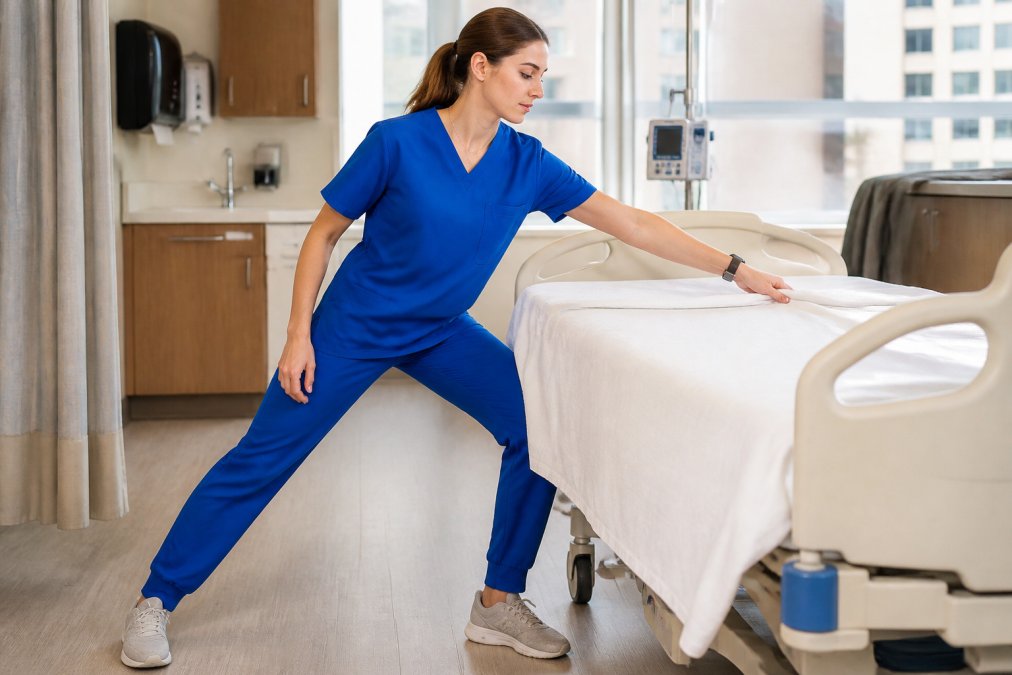
During a typical 12-hour shift, you'll bend, reach, stretch, and move in ways that test your scrubs' durability and comfort. Scrubs that fit well at the beginning of your shift should still fit well at the end, without bunching, riding up, or creating pressure points.
Fabric Technology and Range of Motion
Modern scrub fabrics often incorporate stretch technology that allows your body to move freely without the fabric pulling or restricting you. Four-way stretch fabrics, which stretch in all directions, provide superior range of motion compared to traditional cotton blends (peer-reviewed research). The fabric blend also affects breathability and moisture-wicking, which matters during physically demanding shifts. Polyester-based blends typically offer better moisture-wicking than pure cotton. Love2wear Scrubs uses fabric compositions designed specifically for healthcare environments, balancing stretch, breathability, and durability.
Fit Styles That Support Movement
Tapered fits, bootcut styles, and straight cuts each offer different benefits for movement. Tapered fits provide a simplified silhouette and prevent pant legs from dragging, which is helpful in busy clinical environments. Bootcut styles offer a bit more room through the leg while still maintaining a polished appearance. Straight cuts provide maximum room for movement. The best fit style for your 12-hour shifts depends on your body type, personal preference, and workplace dress code.
Flattering Scrub Styles for Different Body Types
Scrubs don't have to be unflattering. The right fit and style can complement your body type while maintaining professionalism and comfort. Different body types benefit from different approaches. Pear-shaped bodies often look better in straight or bootcut pants with fitted tops. Apple-shaped bodies benefit from tops with vertical seaming and pants with a higher rise. Hourglass figures typically look best in tapered or fitted styles that follow your natural curves.
Tapered Fit and Bootcut Options
Tapered scrub pants create a simplified silhouette by fitting closer through the thigh and tapering toward the ankle. This style is flattering for most body types and prevents pant legs from dragging or getting caught on equipment. Bootcut pants offer a middle ground between tapered and straight cuts, fitting through the hip and thigh with a slight flare at the ankle, which many people find flattering and comfortable.
V-Neck vs. Crew Neck Tops
V-neck scrub tops create a longer vertical line down the torso, which can be flattering for people with shorter necks or wider shoulders. V-necks also tend to feel cooler, which is valuable during active shifts. Crew neck tops provide a classic, professional appearance and work well for people with longer necks or those who prefer more coverage at the neckline. The choice often comes down to personal preference and workplace dress code.
Drawstring and Elastic Waistband Choices
Drawstring waistbands allow you to adjust the fit throughout your shift, which is helpful if your body changes during the day or if you're between sizes. Love2wear Scrubs offers scrub sets with adjustable drawstring waistbands that provide flexibility without sacrificing professional appearance. Elastic waistbands provide a clean, seamless look and are easier to put on and take off quickly. They work well if you've measured accurately and know your exact size.

Fabric Blend Impact on Fit and Durability
The fabric composition of your scrubs affects not only how they feel but also how they fit over time. Most modern scrubs use a blend of polyester and cotton rather than pure cotton. Polyester adds durability, moisture-wicking, and stretch recovery, while cotton provides breathability and comfort.
4-Way Stretch and Recovery
Four-way stretch fabrics stretch in all directions, which provides superior range of motion compared to fabrics with limited stretch. Equally important is the fabric's recovery, its ability to return to its original shape after stretching. High-quality stretch fabrics maintain their shape throughout the day and over many wash cycles, which is why they're worth the investment.
Shrinkage and Post-Wash Fit Expectations
Most scrub fabrics will shrink slightly in the wash, particularly if you use hot water or high heat in the dryer. Understanding the expected shrinkage helps you choose the right size initially. Washing scrubs in warm or cool water and drying on low heat minimizes shrinkage and extends the life of the fabric. Love2wear Scrubs are designed to withstand regular washing and maintain their fit through many wear cycles.
Common Fitting Mistakes to Avoid
The most common mistake is ordering the same size you wear in street clothes without measuring or consulting a scrub-specific size chart. Scrubs fit differently than regular clothing, and sizes vary significantly between brands.
Another frequent mistake is choosing size based on one measurement only, usually waist or bust, without considering your full proportions. Ignoring the rise and inseam is another common error, many people focus on the top size and pants waist size but don't pay attention to whether the rise and inseam match their proportions. Finally, some healthcare professionals order scrubs without considering the fit style. A size medium in a tapered fit will look and feel very different from a size medium in a straight cut.
Finding scrubs that fit properly transforms your comfort during long shifts and boosts your professional appearance. The process starts with accurate measurements and continues with understanding how different brands size their products. Love2wear Scrubs simplifies this process by providing detailed size charts and offering quality scrubs designed specifically for healthcare professionals working demanding shifts. Our V-neck Straight-cut Scrubs and New Stretch Quick-drying Medical Scrubs are engineered for comfort and durability, with modern fits that move with your body throughout your shift. Start with your measurements, consult our sizing guide, and experience scrubs that actually fit your body and support your work.

Frequently Asked Questions
How do I know what size scrubs to get?
Start by measuring your bust, waist, hips, and inseam using a soft measuring tape. Compare these measurements to the size chart for the specific scrub brand, as sizing varies between manufacturers. Street clothing size often differs from scrub size, so always reference the actual measurements rather than assuming your regular size will work. Most retailers provide detailed sizing guides to help you match your body measurements to the correct scrub size.
Should scrubs be baggy or snug?
Scrubs should fit snugly without being tight or restrictive. The fabric should skim your body without clinging, allowing full range of motion for bending, reaching, and moving during long shifts. A snug fit maintains a professional appearance and prevents fabric from shifting during patient care, while excess bagginess can look unprofessional and get in the way. The goal is comfort with structure, not oversized or form-fitting.
Do scrubs shrink after washing?
Most scrubs made from polyester blends shrink minimally, typically 1-3% with proper care. However, fabric composition matters: higher cotton content increases shrinkage risk. To minimize shrinkage, wash in cold water, avoid high heat in the dryer, and follow care instructions. Understanding post-wash fit expectations helps you choose the right size initially. Quality fabric blends with 4-way stretch technology maintain their shape better through repeated washing than basic polyester options.
How should scrub pants fit at the waist?
Scrub pants should sit at your natural waist with a snug but comfortable fit. You should be able to fit one finger between the waistband and your body when standing. The rise (distance from crotch to waistband) affects overall comfort during 12-hour shifts, so ensure it doesn't pull or sag. Drawstring or elastic waistband options provide flexibility for movement and position changes throughout your shift while maintaining professional appearance.
Is it better to size up or down in scrubs?
Always size based on your actual measurements rather than sizing up or down. Sizing up creates excess fabric that shifts during movement and looks unprofessional, while sizing down restricts movement and creates discomfort during long shifts. Use the brand's size chart to find your true size. If you fall between sizes, consider the fit style: tapered cuts suit smaller frames, while straight cuts work for most body types.
What fabric technology makes scrubs more comfortable for long shifts?
Look for 4-way stretch fabric blends that move with your body in all directions. Polyester-dominant blends offer durability and easy care, while moisture-wicking properties keep you dry during physically demanding shifts. Quick-drying fabrics reduce wrinkles and maintain professional appearance throughout the day. Fabric composition directly impacts range of motion, comfort, and how well scrubs maintain their fit after washing, making it essential for 12-hour shift comfort.
How can I find flattering scrubs for my body type?
Choose styles that balance your proportions: tapered fits create definition for straight body types, bootcut options flatter most figures, and V-neck tops elongate the torso. Drawstring waistbands offer adjustability for different body shapes, while higher-rise pants prevent gaps at the waist. Avoid oversized cuts that hide your shape. Understanding how different necklines, rises, and leg cuts work with your measurements helps you select scrubs that look professional and feel confident during patient care.
This article was written using GrandRanker