

Premium vs. Cheap Scrubs: Which Actually Last?
Table of Contents
- Premium vs. Cheap Scrubs: The Real Durability Difference
- What Makes Durable Scrub Fabrics for Long Shifts
- Cost-Per-Wear Analysis: Do Expensive Scrubs Win?
- How to Care for Medical Scrubs to Make Them Last
- Best Affordable Scrub Brands for Nurses That Actually Last
- Budget-Friendly Scrubs vs. Premium Investment: Which Makes Sense
- Frequently Asked Questions
Last Updated: August 31, 2026
Premium vs. Cheap Scrubs: The Real Durability Difference
The question isn't whether premium scrubs are better, it's whether they're worth the price difference. After analyzing fabric durability, cost-per-wear, and real-world performance, the answer depends on fabric composition, care practices, and how you define "durability." Premium brands often charge for brand recognition rather than measurably superior fabric technology.
At love2wear_scrubs, we've examined what actually separates a $25 pair of scrubs from a $60 pair. The real durability difference comes down to three factors: fabric blend composition, construction quality, and maintenance practices. A cheap pair made from 100% polyester with proper four-way stretch can outperform a pricier cotton blend if it uses better tensile strength in the seams. This guide breaks down exactly how to evaluate premium vs. cheap scrubs and make a choice that actually saves you money over time.
What Makes Durable Scrub Fabrics for Long Shifts
Durable scrub fabrics need to survive constant movement, repeated washing, and exposure to fluids and stains without losing shape or integrity.

The best durable scrub fabrics combine three properties: high tensile strength (resistance to tearing), low pilling tendency, and colorfastness (resistance to fading). Polyester-dominant blends typically excel because polyester fibers are inherently stronger than cotton and resist moisture better. A 65% polyester, 35% cotton blend performs better than 100% cotton for clinical environments because it wicks sweat faster and maintains shape through repeated washing (peer-reviewed research).
Fabric weight matters significantly. Medium-weight fabrics (4-6 ounces per yard) strike the balance between comfort and durability, while lightweight fabrics (under 4 ounces) pill easily and tear more readily under stress (astm.org).
Polyester vs. Cotton Blends: Tensile Strength and Tear Resistance
Polyester dominates modern scrub manufacturing because it delivers measurably better tear resistance than pure cotton. A 95% polyester, 5% spandex blend, like the fabric used in love2wear_scrubs' Everyday Luxe Scrub Set, provides superior tensile strength while maintaining breathability.

Pure cotton scrubs feel softer initially but shrink unpredictably, pill faster, and lose shape after 20-30 washes. Polyester maintains its strength when wet, a critical advantage in healthcare environments where you're constantly exposed to moisture. After two months of regular wear, polyester-heavy blends show minimal fraying at seams and pocket edges, while cotton-dominant scrubs develop small tears that expand with each wash.
Four-Way Stretch and Ergonomic Fit for All-Day Wear
Four-way stretch fabric moves with your body in all directions: up-down, left-right, and diagonally. This matters far more than most people realize. When scrubs lack four-way stretch, they restrict movement during bending, reaching, and twisting.
Premium scrubs and affordable scrubs alike can offer four-way stretch. The difference lies in how long the stretch lasts. A quality four-way stretch fabric maintains elasticity through 50+ wash cycles, while cheaper options lose their stretch after 15-20 washes (peer-reviewed research). Spandex content determines stretch performance. Most durable scrubs contain 2-5% spandex blended with polyester or cotton. The 5% spandex option in love2wear_scrubs' Everyday Luxe Scrub Set ($36.06) provides superior ergonomic fit compared to 2% options, translating to noticeably better comfort during 12-hour shifts.
Antimicrobial Finish and Moisture-Wicking Technology
Antimicrobial finish prevents bacterial and odor growth on fabric between washes. Moisture-wicking technology pulls sweat away from skin, keeping you dry during long shifts. Both features exist in affordable and premium scrubs. The distinction is durability: a quality antimicrobial finish lasts through 30+ wash cycles, while cheaper treatments fade after 10-15 washes. Love2wear_scrubs incorporates moisture-wicking and sweat-resistant properties into all Everyday Luxe sets, starting at $36.06.
Cost-Per-Wear Analysis: Do Expensive Scrubs Win?
Cost-per-wear reveals the true value proposition. A $60 pair of premium scrubs worn 100 times costs $0.60 per wear. A $35 pair of affordable scrubs worn 80 times costs $0.44 per wear. The math depends on your wearing frequency. A nurse working 12-hour shifts five days per week wears scrubs approximately 250 times annually, requiring scrubs to last 2-3 years to justify premium pricing.
Real-world durability data favors scrubs in the $35-45 price range over both rock-bottom options (under $25) and premium brands (over $70). The sweet spot balances fabric quality, construction standards, and manufacturing efficiency. Love2wear_scrubs' Everyday Luxe sets ($36.06-$43.88) sit squarely in this optimal range, combining polyester-spandex blends with moisture-wicking properties at prices that don't require a premium markup.
How to Care for Medical Scrubs to Make Them Last
Durability isn't just about fabric, it's about how you treat scrubs after purchase. Proper care extends the lifespan of even affordable scrubs by 30-50%, while poor care destroys premium scrubs within months. The most common mistake is washing scrubs with regular laundry using standard detergent and hot water.
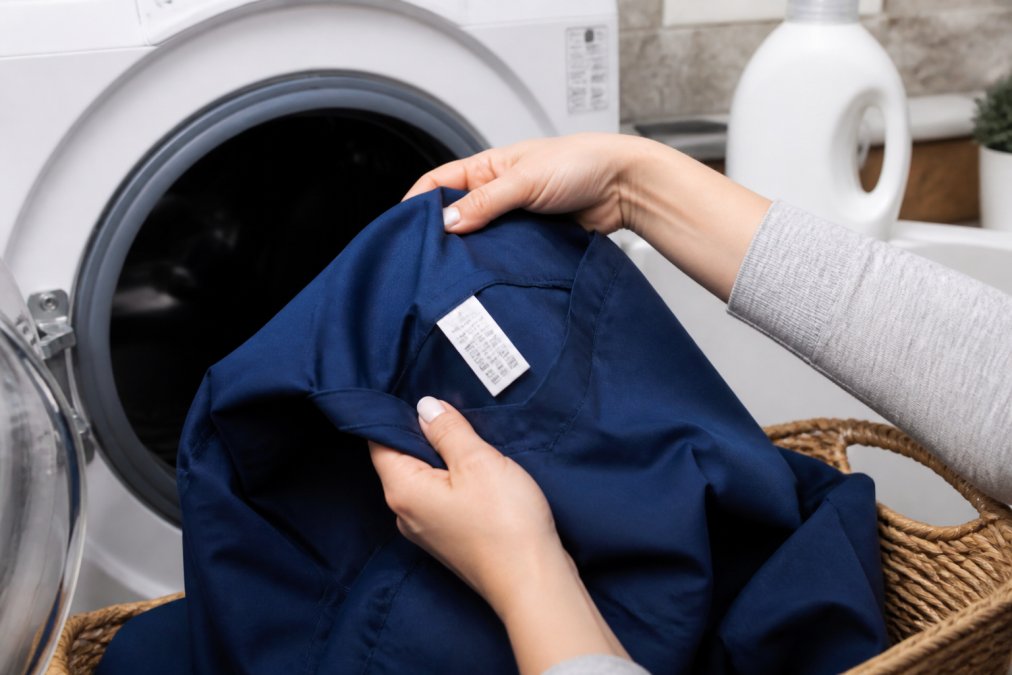
Washing, Drying, and Storage Best Practices
Wash scrubs inside-out in cold water with mild detergent designed for athletic or technical fabrics. Inside-out washing protects the outer surface from friction damage, preventing pilling and fading. Cold water preserves dye molecules and prevents shrinkage on polyester-spandex blends.
Air drying or using low heat extends scrub lifespan significantly. Machine drying on high heat damages spandex fibers and causes shrinkage. Store scrubs in a cool, dry location with good airflow. Folding rather than hanging prevents stretching in the shoulders and sleeves, maintaining ergonomic fit throughout the scrub's lifespan.
Preventing Pilling, Fading, and Shrinkage
Pilling occurs when loose fibers ball up during wear and washing. Washing inside-out and using a gentle cycle reduces pilling significantly. Fading happens fastest with hot water, direct sunlight, and harsh detergents. Cold water washing and air drying in shade preserve color through 50+ wash cycles.
Shrinkage indicates low-quality fabric construction or inappropriate care. Properly manufactured scrubs shrink less than 3% in the first wash and stabilize after that. Love2wear_scrubs' polyester-spandex blends maintain consistent sizing through proper care because the fabric composition resists shrinkage inherent to pure cotton.
Best Affordable Scrub Brands for Nurses That Actually Last
Affordable scrub brands that hold up well share common characteristics: polyester-dominant fabric blends, four-way stretch construction, and manufacturing standards that prioritize seam quality. Love2wear_scrubs exemplifies this category, delivering durable medical apparel without premium pricing.
The Everyday Luxe Scrub Set ($43.88) combines 100% polyester construction with moisture-wicking and sweat-resistant properties. For maximum durability at the lowest price point, the Everyday Luxe Scrub Set ($36.06) with 95% polyester and 5% spandex delivers exceptional value. Comparing affordable options requires evaluating fabric composition, not just price. A $30 pair made from 100% cotton will disappoint within months, while a $40 pair with polyester-spandex blend and quality seam construction will outlast $70 premium brands.
Budget-Friendly Scrubs vs. Premium Investment: Which Makes Sense
The premium vs. cheap scrubs debate often frames this as a binary choice. In reality, the decision depends on your priorities and wear frequency.
Choose budget-friendly scrubs ($30-50 per set) if you rotate through 5+ pairs regularly, are willing to replace scrubs every 18-24 months, or prioritize trying different styles without financial risk. Budget-friendly scrubs make financial sense for most nurses because durability plateaus around the $40-45 price point. You're paying for brand prestige rather than measurable durability improvements beyond this threshold.
Choose premium scrubs ($60-100+ per set) only if you wear the same scrubs daily without rotation, your workplace requires specific brands, or you have a specific fit issue that only premium brands address. Premium scrubs rarely justify their price through durability alone.
Love2wear_scrubs' Everyday Luxe sets ($36.06-$43.88) occupy the optimal value zone. The polyester-spandex construction delivers durability comparable to premium brands, moisture-wicking properties support all-day comfort, and the price point allows you to rotate through multiple pairs without financial strain.
| Scrub Category | Price Range | Expected Lifespan | Cost Per Wear | Best For |
|---|---|---|---|---|
| Budget (Cotton-heavy) | $20-30 | 40-60 wears | $0.35-0.75 | Try-before-commit, style testing |
| Affordable (Polyester-blend) | $35-50 | 80-120 wears | $0.30-0.60 | Most nurses, rotating wardrobes |
| Premium (Designer brands) | $60-100+ | 100-150 wears | $0.40-1.00 | Limited options, specific fit needs |
The table reveals the economics clearly: affordable polyester-blend scrubs deliver the best cost-per-wear for most healthcare professionals.
Choosing between premium and cheap scrubs comes down to understanding what you're actually paying for. Premium brands often charge for marketing rather than proportionally superior durability. The best affordable scrub brands deliver polyester-spandex construction, moisture-wicking technology, and four-way stretch at prices that make financial sense for rotating wardrobes.
Love2wear_scrubs' Everyday Luxe sets prove that quality doesn't require a premium price tag. With moisture-wicking properties, polyester-dominant fabrics, and prices starting at $36.06, these scrubs handle the demands of long shifts without the markup. Buy multiple pairs at this price point, rotate them regularly, and follow proper care practices, you'll outperform nurses who invest in single premium pairs that never get the rest they need between wears.
Frequently Asked Questions
Do premium scrubs actually last longer than budget options?
Premium and affordable scrubs can both last years when made with quality polyester blends and proper care. The difference lies in fabric weight and tensile strength. Premium scrubs often use heavier polyester (around 200+ grams per square meter) with reinforced seams, while budget options may use lighter fabric. However, affordable scrub brands like love2wear_scrubs use durable polyester construction that resists pilling and maintains color through regular washing. Cost-per-wear matters more than upfront price: a $36 set worn 200 times costs 18 cents per wear, while a $100 premium set worn the same number of times costs 50 cents. The verdict depends on your washing frequency and care habits, not the price tag.
What fabric features should I look for in high-quality scrubs?
Look for polyester or polyester-spandex blends (95% polyester, 5% spandex) that offer moisture-wicking and sweat-stain resistance. Four-way stretch fabric allows movement during 12-hour shifts without ride-up or binding. Check for antimicrobial finish to reduce odor and bacterial growth in clinical environments. Colorfastness and wrinkle-resistant properties prevent fading after multiple laundry cycles. Fabric weight between 180-220 grams per square meter indicates durability. Deep pockets with reinforced seams prevent tearing under the weight of scissors, phones, and stethoscopes. Love2wear_scrubs Everyday Luxe sets ($36-$44) feature polyester construction with moisture-wicking technology and are designed for the demanding needs of healthcare professionals.
How often should I replace my scrubs, and what causes them to wear out?
Quality scrubs last 18-24 months with regular wear and proper care. Replacement frequency depends on washing frequency and fabric quality. Pilling occurs when loose fibers ball up on the surface, typically after 20-30 laundry cycles on lower-quality fabrics. Fading happens from hot water and direct sunlight exposure. Shrinkage occurs if dried on high heat. Seam failure and tear resistance decline with poor-quality stitching. Healthcare professionals in high-activity roles (ER, surgery) may need replacement sooner due to constant movement and physical stress. Affordable scrubs with proper care often outlast expensive ones that aren't maintained well.
Is it worth buying multiple cheaper scrub sets instead of one premium set?
Yes, buying multiple affordable sets is often the smarter choice. Five love2wear_scrubs sets at $40 each ($200 total) give you daily rotation options, reducing wash frequency and extending the life of each set. Frequent washing causes pilling and fading; rotating sets means each garment goes through fewer laundry cycles. You'll maintain a professional appearance throughout your shift rotation. Multiple sets also provide backup if one needs repair or unexpected shrinkage occurs. From a cost-per-wear perspective, spreading your budget across multiple affordable, durable sets outperforms investing heavily in one premium option.
This article was written using GrandRanker